Showing posts with label Brazil. Show all posts

Friday, August 5, 2016

In Brief... World News Review Is Anyone Watching Latin America?

From http://el-paso.ucg.org/ or call 1-888-886-8632. Please follow this site here.

“The next near-death experience for world financial markets will occur in Brazil-within weeks, or even days. Consequences for North America could be catastrophic…. Brazil, with 164 million people, accounts for nearly half of Latin America's total economic activity…. If Brazil implodes, Argentina, Chile, and Mexico could quickly follow. Venezuela is already in a tailspin and has recently devalued. Now, the really scary part…if Brazil's economy comes crashing down, and takes the rest of the continent with it, American business and banks will be dealt a devastating blow that will dwarf the Asian crisis in magnitude and severity. U.S. banks have far more loan exposure to Latin America than they did in Asian or Russia…
“The financial world is overseen by three economic great economic powerhouses. Japan is overlord of Asia's finances. Western Europe dominates East Europe and Russia. The U.S.'s bailiwick is Latin America, Central America, and the Caribbean. Japan, mired in deep recession, has failed visibly to defend Asia. Europe has done no better in Russia. If the United States fumbles its financial manifest destiny in Latin America, head for the storm cellars [emphasis ours]” (“Storm Warnings in Brazil” by Eric Margolis, October 8, 1998).

You might also be interested in...

Thursday, August 4, 2016

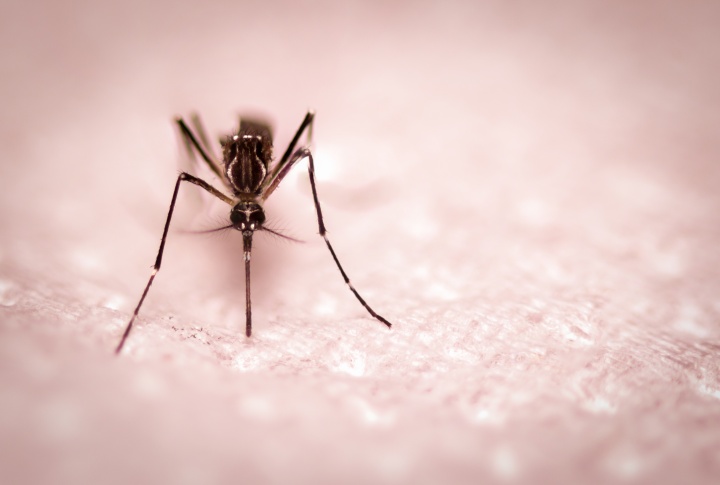
Current Events & Trends Zika virus—the latest health scare

From http://el-paso.ucg.org/ or call 1-888-886-8632. Please follow this site here.

MP3 Audio (5.79 MB)
“As many as four million people could be infected by the end of the year” (Donald McNeil Jr., Catherine Saint Louis and Nicholas St. Fleur, “Short Answers to Hard Questions About Zika Virus,” The New York Times, Feb. 3, 2016).
Meanwhile, the U.S. Centers for Disease Control and Prevention announced that its Emergency Operations Center had been activated to Level 1, meaning its staff will be working around the clock in emergency conditions.
Discovered in the Zika forest of Uganda in 1947, the virus is common in Africa and Asia. It didn’t begin spreading in the Western Hemisphere until May 2015, with an outbreak occurring in Brazil. It’s had a notable impact throughout Latin America and the Caribbean. As of this writing, only a few cases have been reported in the United States and now Europe.
For most, the infection causes no symptoms and does no lasting harm. However, “concern is focused on women who become infected while pregnant and those who develop a temporary form of paralysis after exposure to the Zika virus” (ibid.).
In October 2015, doctors in northern Brazil noted a surge in babies with microcephaly—a birth defect of abnormally small heads and underdeveloped brains. There can be various causes for this problem, including other infections such as German measles (or rubella) and cytomegalovirus. A causal link to the Zika virus in the recent cases is not certain, but there is significant evidence of a direct connection (Katie Worth, “New Link Between Zika Virus and Microcephaly Is Found in Brazil,” PBS.org, Feb. 4, 2016). Many nations in South America are advising citizens to hold off on pregnancy until as late as 2018.
There’s a recent case in Dallas, Texas, of the virus being transmitted sexually from someone who’d recently returned from Venezuela, but this is considered to be a very rare occurrence—with only two documented cases linking the virus to sex before this, in 2008 and 2013.
What prompted the outbreak this past year is unknown. One speculation is that it may have been a traveler from Africa or Asia to the 2014 World Cup in Brazil. But it could have been anyone—wrong place, wrong time.
It’s assumed that the United States might have outbreaks in the southeastern part of the country, but that the chance of it being major is low—“because most people in the US hang out indoors in the air conditioning, install window screens, use bug repellent, and keep their yards free of standing water” (Beth Skwarecki, “Your Non-Alarmist Guide to the Zika Virus,” Lifehacker.com, Feb. 2, 2016).
Certainly this virus is a serious problem. But it may prove no worse than many other health issues the world is dealing with. Yet it should be remembered that Jesus warned of increasing disease epidemics before His return (Matthew 24:3-8). Any major outbreaks should serve as a wakeup call to that reality.
In any case, for this and any other health crisis, we should be seeking the true Healer. In Him alone is true security and well-being. (Sources: The New York Times, Yahoo News, PBS.org, Lifehacker.com.)

You might also be interested in...

Wednesday, June 1, 2016

How One of Today's 'Bad Guys' Ended the Scourge of Slavery

From http://el-paso.ucg.org/ or call 1-888-886-8632. Please follow this site here.


There is no doubt about it—the slave trade was abhorrent. Millions of people were transported across the Atlantic in the most horrific of conditions, taken against their will and sold like cattle. Indeed, cattle were treated better than the victims of this despicable trade.
March 25 was the 200th anniversary of the abolition of the slave trade throughout the British Empire—marked throughout the month with commemorative events. One such event was held in Elmina Castle, Ghana, a castle built by the Portuguese in the late 15th century and used for the holding of slaves before transit to the New World.
The following day a service of thanksgiving was held in London, attended by Queen Elizabeth and British Prime Minister Tony Blair. The service was interrupted at one point by a man of African descent demanding the British monarch apologize for slavery.
Today it's popular to bash the West, and the major English-speaking nations in particular, and to blame them for many of the world's problems. In line with this, demands for an apology for slavery and reparations have been increasing in recent years.
Such demands overlook a crucial point.
Before the British parliamentary vote to abolish the slave trade, slavery was a fairly universal practice, as it had been throughout history. What Great Britain did, at a time when the slave trade was highly lucrative for all participants, was a totally radical, progressive and bold step. We can be thankful for the foresight shown by men like William Wilberforce, the leader of the antislavery movement.
Wilberforce's fight to end slavery is portrayed in the recent movie Amazing Grace. His friend John Newton, a former slave trader, wrote the famous hymn of that name following his repentance. He devoted the remainder of his life to serving others in an attempt to atone for his contribution to the slave trade.
In reviewing the 2005 book Bury the Chains: Prophets and Rebels in the Fight to Free an Empire's Slaves by Adam Hochschild, African-American columnist Thomas Sowell wrote: “To me the most staggering thing about the long history of slavery—which encompassed the entire world and every race in it—is that nowhere before the 18th century was there any serious question raised about whether slavery was right or wrong. In the late 18th century, that question arose in Western civilization, but nowhere else.”
The book, Sowell notes, “traces the history of the world's first anti-slavery movement, which began with a meeting of 12 'deeply religious' men in London in 1787.”
It took 20 years for these men to achieve their goal of ending the slave trade. Sowell continues: “Even more remarkable, Britain [then] took it upon itself, as the leading naval power of the world, to police the ban on slave trading against other nations. Intercepting and boarding other countries' ships on the high seas to look for slaves, the British became and remained for more than a century the world's policeman when it came to stopping the slave trade” (“Today's 'Bad Guys' Ended Slavery,” Lansing State Journal, Feb. 12, 2006.)
Noted French historian Alexis de Tocqueville described the decision of the British parliament to end the slave trade as “absolutely without precedent . . . If you pore over the histories of all peoples, I doubt that you will find anything more extraordinary” (quoted by Hochschild, p. 1).
Freedom, “a peculiar institution”
With this historic perspective, we can be thankful that, at last, after thousands of years of human history, a nation had the moral conscience to do something about it—to end the trade in human beings.
What was the magnitude of Britain's undertaking? “At the end of the eighteenth century, well over three quarters of all people alive were in bondage of one kind or another, not the captivity of striped prison uniforms, but of various systems of slavery or serfdom. The age was a high point in the trade in which close to eighty thousand chained and shackled Africans were loaded onto slave ships and transported to the New World each year. In parts of the Americas, slaves far outnumbered free persons.
“The same was true in parts of Africa, and it was from these millions of indigenous slaves that African chiefs and slave dealers drew most of the men and women they sold to Europeans and Arabs sailing their ships along the continent's coasts.
“African slaves were spread throughout the Islamic world, and the Ottoman [Turkish] Empire enslaved other peoples as well. In India and other parts of Asia, tens of millions of farmworkers were in outright slavery, and others were peasants in debt bondage that tied them and their labor to a particular landlord as harshly as any slave was bound to a plan-tation owner in South Carolina or Georgia.
“Native Americans turned prisoners of war into slaves and sold them . . . In Russia, the majority of the population were serfs, often bought, sold, whipped, or sent to the army at the will of their owners. The era was one when, as the historian Seymour Drescher puts it, 'freedom, not slavery, was the peculiar institution'” (Hochschild, p. 2.)
Britain and the African slave trade
Slavery existed in Africa well before the arrival of the Europeans. “The Atlantic slave trade depended on the fact that most of the societies of Africa—chiefdoms and kingdoms large and small, even groups of nomads—had their own systems of slavery. People were enslaved as punishment for crimes, as payment for a debt, or, most commonly of all, as prisoners of war . . .
“Once European ships started cruising the African coast offering all kinds of tempting goods for slaves, kings and chiefs began selling their human property to African dealers who roamed far into the interior. Groups of captives, ranging from a few dozen to six or eight hundred, were force-marched to the coast, the prisoners' hands bound behind their backs, their necks connected by wooden yokes. Along the coast itself, a scattering of whites, blacks and mulattos worked as middlemen for the Atlantic trade” (Hochschild, p. 16).
And then William Wilberforce and his compatriots entered the picture. Driven by a resolute Christian morality, within a generation they persuaded the British government to outlaw slavery in 1807, when the slave trade was still enormously profitable. Playing a hugely important role, the British Royal Navy also served the cause, patrolling the coast of Africa for slave ships and freeing slaves wherever they encountered them. By the end of the century, slavery was outlawed nearly everywhere.
Britain's enthusiasm for ending the slave trade “led it to much greater involvement in African affairs. Additional colonies were acquired (Sierra Leone, 1808; Gambia, 1816; Gold Coast, 1821) to serve as bases for suppressing the slave trade and for stimulating substitute commerce.” This “contributed to the expansion of both its commercial and colonial empire” ( The Encyclopaedia Britannica, 15th edition, Macropedia, “Colonialism,” p. 892).
Certainly, many British people profited from the slave trade before its abolition, but the British Empire became much wealthier after the trade was ended. The abolition of the slave trade advanced the growth of the Empire as the British people, descendants of biblical Ephraim, were receiving the birthright promise of becoming “a multitude of nations” (Genesis 48:19; and see our free booklet The United States and Britain in Bible Prophecy ). Many of the peoples of the new colonies would later serve alongside Britain in both world wars.
After the abolition of the slave trade, it took another 26 years to end slavery itself throughout the British Empire. The end of the four-year transition period coincided with Queen Victoria's ascension to the throne, giving the new queen a prestigious boost at the beginning of her 64-year reign.
One runaway slave fleeing the United States settled just outside of Windsor, Ontario, and founded an institute for others who followed. Josiah Henson's headstone bears a replica of Victoria's crown, in appreciation of the freedom he found within the British Empire, whose head was Victoria, whom he later met while on a visit to London. His autobiography was the inspiration for Harriet Beecher Stowe's Uncle Tom's Cabin.
America follows Britain's lead
A quarter-century later, America would also overturn its history of slavery. Some 365,000 mostly white males of British descent died fighting for the Union side in the American Civil War, enabling peoples of African descent to be free. No other nation sacrificed so many people for such a noble cause.
The United States, descended from the biblical Manasseh (again, see our free booklet), was to follow Great Britain as the world's dominant power. A history of both nations, written by historian Angus Calder, is appropriately titled Revolutionary Empire. The two branches of the Anglo-Saxon “empire,” the British Empire and the United States, were a fulfillment of the promises made to the patriarch Joseph's sons, by his father Israel (Genesis 48:15-19). They were to be a blessing to the world, as promised to their ancestor Abraham (Genesis 12:1-3).
It wasn't only on the high seas that the British were stamping out slavery. Toward the end of the 19th century the British high commissioner for Northern Nigeria, Frederick (later Lord) Lugard, made it a priority when administering the 300,000 square miles of his territory.
“In the south were pagan tribes and in the north, historic Muslim city-states with large walled cities whose emirs raided the tribal territories to the south for slaves … His policy was to support the native states and chieftainships, their laws and their courts, forbidding slave raiding and cruel punishments . . .” Lugard was “following the explorer David Livingstone's lead in fighting Arab slave raiders in eastern Africa” ( Encyclopaedia Britannica, 15th edition, Macropedia, “Lord Lugard,” p. 176).
Slavery returns to Africa
Sadly the story doesn't end there. Once again, five decades after Britain gave its colonies independence, slavery is back in every single African nation, according to the United Nations Children's Fund (UNICEF).
“The trafficking of human beings is a problem in every African country, says UNICEF”, states an April 23, 2004, BBC News article. “The report, which covers 53 African nations, says children are the biggest victims in what is a very complex phenomenon. It describes how they are forced into slavery, recruited as child soldiers or sold into prostitution. In Africa, children are twice as likely to be trafficked as women.”
The report “found that 89% of the countries had trafficking to and from neighbouring countries, but 34% also had a human trade to Europe . . . Of the countries surveyed, 26% said trafficking was taking place to the Middle East.” Sadly, few voices are being raised in Africa calling for an end to this despicable trade.
The trade in human beings, which includes the sex trade, is now estimated to be the biggest business in the world, accounting for a full 10 percent of the world's total commerce. The biblical book of Revelation foretells an end-time trading system that includes trafficking in “the bodies and souls of men” (Revelation 18:13).
Clearly, the world is long overdue for another William Wilberforce and another nation to take the initiative in ending the modern-day slave trade as Great Britain did 200 years ago. GN

You might also be interested in...

Thursday, May 26, 2016

What was the Bataan Death March?

From http://el-paso.ucg.org/ or call 1-888-886-8632. Please follow this site here.

On June 23, 1938, John Rynerson, joined the 29th Army Corps of Engineers topographical mapping unit. Little did John realize that he would find himself in a few years involved in World War II and fighting for his life on one of the most infamous and terrible marches of the war. After several transfers John was placed in the 93rd Bomber Squadron in the Philippines. As it turned out, this transfer saved his life. The plane that he had worked on as a radio operator crashed, and he would have been on that plane if he had not been transferred. John feels that God was already working in his life to preserve him.
After the attack on Pearl Harbor Dec. 7, 1941, the Japanese attacked the Philippines. On April 9, 1942, the garrison on Bataan was taken over by the Japanese and John's long and difficult struggle for survival began. Only one third of the soldiers taken captive at Bataan survived the Japanese imprisonment.
After the capture of Bataan, the Japanese marched the American prisoners over 70 miles. This became the infamous “Bataan Death March” in which more than 600 American soldiers died. They marched for a period of seven days after already being weakened because of the short rations they had to live on before they surrendered to the Japanese. The soldiers' captors allowed the prisoners to eat only once during the entire march. If any soldier slowed the march, he was killed.
John quickly realized he was in a struggle for survival. He began to make observations that led to actions that would save his life. The treatment of the prisoners by the Japanese was horrendous. As they marched, they would meet Japanese soldiers moving south. John noticed that the first group of American soldiers were treated better than the last group of soldiers. The Japanese were taught never to surrender, and they were so startled to see prisoners of war that they passed by the first group without harming the prisoners. As they came to the end of the line of prisoners, they would start beating and mistreating prisoners. Anyone who slowed down or was unable to walk was killed without hesitation. John made the important decision to be in that first group of prisoners who started out in the morning.
John was a prisoner of war for over three years. He was moved to a prison camp in Manchuria on the “death” ship, Tori Maru. The ships with prisoners were not marked, so American warplanes often attacked them, not knowing that their fellow soldiers were inside those ships. John was able to stay on deck during the voyage on the Tori Maru and avoided being put below where the conditions were terrible.
He was able to survive because of the mental attitude that he had as he determined that if one soldier was to survive this imprisonment, it was going to be him. He had been taught by his mother to be clean, so when he was given rice, he tried to get the bugs and other unclean material out of the bowl before he ate it. He also knew that he had to have good hygiene and made sure that he stayed as clean physically as possible. He knew that a key to his survival was to stay free from disease. He also had the attitude that he would never give up.
Finally on Aug. 15, 1945, John was released from the Japanese prison camp and returned to his family in the United States. John's family had not known if he was alive for those three long years.
When he returned home, he did not discuss in detail the conditions he endured during his imprisonment as he did not want to burden his family and cause them distress. What an amazing and wonderful example John set enduring the terrible suffering of World War II!
John and Sarah Rynerson were married in 1946 and have been members of God's Church since 1970. They have seen the difficulties and problems that the Church has gone through over the years and have remained faithful and true to God's Word and to the truths that they have been taught. John is now 81 years old and continues to work cleaning floors for grocery stores in the Ogden, Utah, area. What a wonderful example of perseverance and endurance in spite of difficulties and trials.
Christ told us that we must be prepared to “endure” until the end, and there is much we can learn from John Rynerson's example. One of the main reasons John endured has to do with his mental attitude. He determined that he was going to survive the terrible conditions of the Bataan Death March and the following imprisonment.
In Matthew 24:12-13, Christ said: “And because lawlessness will abound, the love of many will grow cold. But he who endures to the end shall be saved.” We have seen this lawlessness on the earth today and conditions will get worse in time. Many have fallen by the spiritual wayside and Satan the devil has completely destroyed their faith, just as the Japanese killed stragglers on the Bataan Death March.
Because of John's determination to survive, he took the steps physically that helped him survive. He ate only “clean” food, removing such contaminants as flies and dirt. He took two canteens of water with him at the start of the march and some food also. He made sure that he was in the front of the line of soldiers marching on the Bataan Death March, which protected him somewhat from the abuse that others later in line were receiving. He tried to do everything he could physically accomplish that would help him with his main goal—survival!
Spiritually, are we doing all that we can to achieve our goal, the Kingdom of God? John ate only clean rice and this helped him avoid deadly physical illness. Spiritually, are we feeding ourselves with a good spiritual diet? This means studying the Bible on a daily basis, attending Church every week possible, going to the Feast of Tabernacles, avoiding contaminating and dirty (unclean) movies, etc. We know the things that lead to a healthy spiritual lifestyle.
Just like John during World War II in a Japanese prison camp, we are in a foreign world. A world that does not know the true God or the purpose of life. This knowledge of God's truth should spur us on to take the measures to insure our success in the only goal worth anything in this life, attaining the Kingdom of God.
John Rynerson had a purpose that he never forgot during those terrible years of World War II—the goal of survival. He had a clearly defined goal that motivated him and a mental attitude that helped him endure.
Let's never forgot the spiritual purpose of our life, the goal that God has set before us and the glory and honor that await those who attain that goal! UN

You might also be interested in...

Thursday, February 4, 2016

What is Mardi Gras? Should Christians celebrate Mardi Gras (Shrove Tuesday)?

From http://el-paso.ucg.org/ or call 1-888-886-8632. Please follow this site here.

The idea behind Mardi Gras or carnival celebrations is that people overindulge before giving up something for Lent, which begins the following day with Ash Wednesday. (Lent is the 40 weekdays from Ash Wednesday to Easter observed by the Roman Catholic, Eastern and some Protestant churches as a period of penitence and fasting.)
The idea of partying before repenting seems to be to get as much revelry and additional sin out of the way before you decide to do anything about it. But that attitude doesn’t show a belief that God’s way is really right and that sin is really wrong.
Note the following encyclopedia article excerpt:
“Some scholars have noted similarities between modern Mardi Gras celebrations and Lupercalia, a fertility festival held each February in ancient Rome. However, modern Carnival traditions developed in Europe during the Middle Ages (5th century to the 15th century) as part of the ritual calendar of the Roman Catholic Church.
“Today pre-Lenten Carnivals are celebrated predominantly in Roman Catholic communities in Europe and the Americas. Cities famous for their celebrations include Nice, France; Cologne, Germany; and Rio de Janeiro, Brazil. New Orleans, Louisiana, holds the most famous Mardi Gras celebration in the United States. Residents of New Orleans have been celebrating Mardi Gras since the 18th century” (“Mardi Gras,” Encarta).
Mardi Gras “ is a lively, colorful [not to mention bawdy and debased] celebration held on Shrove Tuesday, the day before Lent begins ,” says the World Book Encyclopedia. It “ goes back to an ancient Roman custom of merrymaking before a period of fast. ” In places like New Orleans, the period of merrymaking with fancy balls and parades goes on for weeks leading up to Fat Tuesday itself.
It has been suggested by some scholars that the pagan practice of “weeping for Tammuz” that Ezekiel decried (Ezekiel 8:14) was the actual origin of Lent. Tammuz was a pagan god associated with death and rebirth in nature and the husband of the goddess Ishtar (See the Bible commentary on Ezekiel 8 for details. )
The idea of partying before repenting seems to be to get as much revelry and additional sin out of the way before you decide to do anything about it. But that attitude doesn’t show a belief that God’s way is really right and that sin is really wrong, harmful and something to be avoided because it wars against us (1 Peter 2:11) and is contrary to God’s instruction (Romans 13:13-14). It doesn’t show the 100 percent commitment that God wants (Romans 12:1-2).
God says we should always live holy lives and obey His laws because they are good for us (Deuteronomy 10:12-13). Satan is the one who wants us to think that doing wrong things is fun, and his deception has been quite successful (Revelation 12:9; 1 John 2:16).
Neither Mardi Gras nor Lent are commanded in the Bible but come from pre-Christian, pagan customs. What does God think about such pagan customs?
“When the Lord your God cuts off from before you the nations which you go to dispossess…do not inquire after their gods, saying, ‘How did these nations serve their gods? I also will do likewise.’ You shall not worship the Lord your God in that way; for every abomination to the Lord which He hates they have done to their gods… Whatever I command you, be careful to observe it; you shall not add to it nor take away from it” (Deuteronomy 12:29-32).
The New Testament continues this theme. The apostle Paul addressed the issue of whether outside religious customs and practices had any place among Christians:
“What fellowship has righteousness with lawlessness? And what communion has light with darkness? And what accord has Christ with Belial? Or what part has a believer with an unbeliever? And what agreement has the temple of God with idols? For you are the temple of the living God. As God has said: ‘I will dwell in them and walk among them. I will be their God, and they shall be My people.’
“Therefore ‘Come out from among them and be separate, says the Lord. Do not touch what is unclean, and I will receive you. I will be a Father to you, and you shall be My sons and daughters, says the Lord Almighty.’ Therefore, having these promises, beloved, let us cleanse ourselves from all filthiness of the flesh and spirit, perfecting holiness in the fear of God” (2 Corinthians 6:14–18; 2 Corinthians 7:1).
Instead of renaming some of the pagan customs as Christian or allowing the new converts to retain some of their former practices, Paul commanded them to leave behind all of these forms of worship.
Mardi Gras celebrations have nothing to do with God’s commanded Holy Days. On the contrary, they are part of the system from which God’s people should separate themselves.
For more information, please read our booklet Holidays or Holy Days: Does It Matter Which Days We Observe? “

You might also be interested in...

Wednesday, February 3, 2016

How destructive could a geohazard be?

From http://el-paso.ucg.org/ or call 1-888-886-8632. Please follow this site here.


How destructive could an asteroid strike be? What would it be like? Bill McGuire, an expert on natural catastrophes and professor of geohazards at University College London, describes the events that created the Chicxulub crater,buried deep beneath the Yucatan Peninsula and Gulf of Mexico and discovered only recently:
“Here a 10-kilometre [6-mile] asteroid or comet—its exact nature is uncertain—crashed into the sea and changed our world forever. Within microseconds, an unimaginable explosion released as much energy as billions of Hiroshima bombs detonated simultaneously,creating a titanic fireball hotter than the Sun that vaporized the ocean and excavated a crater 180 kilometres [112 miles] across in the crust beneath.
“Shock waves blasted upwards, tearing the atmosphere apart and expelling over a hundred trillion tonnes [metric tons] of molten rock into space,later to fall across the globe. Almost immediately an area bigger than Europe would have been flattened and scoured of virtually all life, while massive earthquakes rocked the planet. The atmosphere would have howled and screamed as hypercanes ripped the landscape apart, joining forces with huge tsunamis to batter coastlines many thousands of kilometres distant.
“Even worse was to follow. As the rock blasted into space began to rain down across the entire planet …the heat generated by its re-entry into the atmosphere irradiated the surface,roasting animals alive as effectively as an oven grill, and starting great conflagrations that laid waste the world's forests and grasslands and turned fully a quarter of all living material to ashes.
“Even once the atmosphere and oceans had settled down, the crust had stopped shuddering, and the bombardment of debris from space had ceased, more was to come. In the following weeks, smoke and dust in the atmosphere blotted out the Sun and brought temperatures plunging by as much as 15 degrees Celsius [27 degrees Fahrenheit].In the growing gloom and bitter cold the surviving plant life wilted and died …
“Life in the oceans fared little better as poisons from the global wildfires and acid rain from the huge quantities of sulphur injected into the atmosphere from rocks at the site of the impact poured into the oceans, wiping out three-quarters of all marine life” ( A Guide to the End of the World , 2002, pp. 159-161).
Especially sobering is how closely these descriptions—scorching flames,enormous conflagrations,suffocating darkness and poisoned water and atmosphere—parallel events prophesied in the book of Revelation. GN

You might also be interested in...

Thursday, January 28, 2016

A Modern Menace Emerging and Reemerging Diseases

From http://el-paso.ucg.org/ or call 1-888-886-8632. Please follow this site here.

This past April, when the first cases of H1N1 swine flu were detected in Mexico and the United States, health officials around the world went on high alert.
Surveillance measures were put in place. Pharmaceutical companies stepped up production of antiviral drugs. In cities with confirmed cases, schools were closed. Large public gatherings, such as sporting events and concerts, were canceled. Malls, restaurants and other public places were empty. The scenes were very similar to what happened during the SARS and avian flu outbreaks that unfolded in Asia earlier this decade.
Aided by modern transportation, the virus spread rapidly. On June 11, with more than 125,000 confirmed cases and 140 deaths in 73 countries, the World Health Organization (WHO) finally declared the never-before-seen virus a pandemic—a global disease outbreak. The organization had long hesitated to take such a step—declaring the first global flu epidemic in 41 years—lest widespread panic result.
What the final outcome will be remains to be seen. With the arrival of summer in the northern hemisphere—and warm temperatures that flu bugs don't like—the spread slowed considerably. While there have been a large number of infections, this strain has been milder than originally feared and has been responsible for a relatively small number of fatalities.
Still, “that may only be the lull before the storm,” warned Richard Besser, M.D., acting director of the Centers for Disease Control (CDC) in Atlanta, Georgia. His concern is over what will happen this fall when the traditional flu season begins. “What has been seen with previous outbreaks is flu goes away in the summer,” he noted. “But during the winter flu spreads better, so the virus could go away and come back.”
“I believe we are not out of the woods yet,” added Christopher Ohl, M.D., associate professor of medicine in the section on infectious diseases at the Wake Forest University School of Medicine in Winston-Salem, North Carolina. “I am concerned this virus is going to be with us for a while. It could change, become more virulent, have an increased secondary transmission rate…in the future.”
Of course, the spread of swine flu isn't the only disease problem health officials are concerned about right now. Let's consider the scope of the threat before us, look at some of the underlying causes, and see what light the Bible sheds on how the situation has developed and where things could go from here.

Deadly pathogens emerging or reemerging

Currently the WHO is monitoring about 40 emerging infectious diseases. These have been around only a few decades.
The list includes acquired immune deficiency syndrome (AIDS), Ebola, dengue hemorrhagic fever, Lassa fever, Nipah, Hendra, hantavirus, Marburg, monkeypox, mad cow disease (BSE), severe acute respiratory syndrome (SARS), West Nile virus, Lyme disease, Legionnaires' disease and the cyclospora parasite. These pathogens—disease-causing agents—have either mutated or genetically recombined to become new strains or novel microbes, or they may have existed for millennia but weren't discovered until recent years.
According to the WHO, at least one new infectious disease has emerged each year since 1980, many of which evade traditional therapies and have no vaccine or cure. “There are far more virulent, very difficult-to-treat infectious diseases today than there were 20 or 30 years ago,” warns Klaus Stohr, D.V.M., Ph.D., director of the influenza task force for the WHO in Geneva, Switzerland.
At the same time, old infectious diseases once believed to be controlled, such as tuberculosis, staphylococcus, cholera, malaria, hepatitis, influenza and diphtheria, are reemerging as deadly new, often drug-resistant strains, or are springing up in new regions of the world.
With so many deadly pathogens coming on the scene, notes Dr. Stohr, “infectious diseases are once again the leading cause of death in the world—something that hasn't been the case since the pre-antibiotic era of the early 1900s.” Of the estimated 57 million deaths that occur annually in the world, the WHO estimates that 15 million of them are directly caused by infectious diseases. Millions more deaths are due to secondary effects of infections.
Scientists have identified close to 200 bacterial, viral, parasitic and fungal pathogens that are linked with emerging and reemerging infections among human beings. There could be another 1,000 out there, according to Dr. Stohr. They just haven't been introduced yet into the population.
At least 75 percent of these pathogens are zoonoses—meaning they are transmitted between animals and people—which makes these diseases even more problematic. Transmission can occur through direct contact with an infected animal's blood, saliva, urine or feces, or via an intermediate vector—typically an insect or rodent—that gets the pathogen from an infected animal reservoir and then passes it to people.
“Zoonotic diseases cannot usually be eradicated due to the fact that it is not possible to eliminate all of the animal reservoirs or vectors that might be carrying the zoonosis,” explains David Freedman, M.D., professor of medicine in the division of geographic medicine at the University of Alabama.
“Even if you developed a vaccine and a cure for a particular zoonotic disease and it was somehow possible to simultaneously treat every person in the world that had it,” he observes, “there are still animals that can transmit that disease back to humans and continue the spread of that pathogen.”

Deadly epidemics prophesied

If you are familiar with end-time Bible prophecy, none of this may be a surprise to you. Perhaps what immediately comes to mind is the four horsemen of the Apocalypse, and in particular the fourth.
The apostle John describes the horse and rider this way: “When He opened the fourth seal, I heard the voice of the fourth living creature saying, 'Come and see.' So I looked, and behold, a pale horse. And the name of him who sat on it was Death, and Hades [the grave] followed with him” (Revelation 6:7-8, emphasis added throughout).
The latter part of this verse refers to death resulting from “the beasts of the earth.” Considering the huge number of deaths described here, this could well refer to epidemics caused by animals that transmit and carry infectious diseases.
In Jesus' parallel prophecy in Matthew 24, He reveals the true identity of this pale green horse: “And there will be… pestilences” (verse 7). The fourth horseman symbolizes climactic, globe-encircling plagues and pandemics. We need only consider the devastating “black death”—bubonic plague that killed tens of millions worldwide in three great waves—to understand how horrifyingly real this prophecy can be.

Many factors behind pandemics

That's the simple explanation for why these outbreaks will intensify. Yet there are a lot of factors behind these pandemics. Many believe mankind is actually creating its own disease problems, albeit unintentionally.
“In almost every case humans are the most important single factor in the surge of new diseases, whether it's feeding cow tissue to cattle to cause mad cow disease, people eating exotic animals in the case of Ebola, or air travel spreading dengue around the world,” claims Thomas Monath, M.D., chief scientific officer with Acambis Inc., a vaccine development company based in Cambridge, Massachusetts.
We are not simply victims of emerging infections, he says, but we're making changes in our environment or lifestyles to cause the emergence or spread of disease. Most of the change that has occurred involves several key areas.

• Agricultural practices and consumption of exotic animals

One of the primary ways new diseases emerge is through what biologists call “genetic recombination.” This can happen when two or more animal species come in contact with each other and exchange the viruses that each carries.
“Two different viruses may infect the same cell. Then the genomes get jumbled, and a totally novel virus emerges—which contains genetic material from both parental strains,” explains Roy Anderson, fellow of the Royal Society (FRS) and professor of infectious disease epidemiology at Imperial College of the University of London.
One way this is happening more and more is through a farming method which is becoming an increasingly common practice in Asia.
“Ducks or chickens are kept in cages hung above pigs, which are housed in pens directly above fishponds, where other types of fowl may also swim and eliminate their own wastes,” notes Bruno Chomel, Ph.D., D.V.M., a veterinary epidemiologist specializing in zoonotic diseases at the University of California College of Veterinary Medicine.
Farmers use this method to save money on pig feed and increase yields of fish. The pigs feed on the duck droppings, and the pig manure fertilizes the fishponds. “The problem is, it puts ducks and other waterfowl, which are major reservoirs of influenza viruses—although it doesn't affect them— in direct contact with pigs, which may also be harboring influenza viruses,” Dr. Chomel says.
A pig that eats duck droppings can take in any viruses the ducks may have, which may include both avian and human flu viruses. Those can combine with the pig's influenza viruses, and then they'll all be mixed up inside the pig's stomach.
That is how the H1N1 influenza virus—which is a mixture of avian, human and pig flu viruses—came to be. One of the reasons scientists are so concerned about the current swine flu outbreak is that it could recombine with a more virulent strain before returning to the northern hemisphere in the fall flu season.
“If a human flu virus, which is easily transmissible to humans, combines with a virulent and novel duck or swine flu, that is when you have problems,” Dr. Chomel says. “You get the worst of both, together in one virus.”
Recombination can also occur when humans eat nondomesticated exotic animals. In China, exotic animals like civet cats, coral snakes, tree shrews, flying squirrels, badgers, martens and pangolins are considered delicacies. In Africa, monkeys, apes, aardvarks and rats are all popular meat choices. Guinea pigs, capybaras and armadillos are commonly eaten in Central and South America.
When people consume these meats, any viruses the animal may have been carrying can combine with viruses the person may have. The result may be a new pathogen that infects human beings.
That is apparently how HIV, the deadly virus that causes AIDS, emerged. HIV is a fusion of the simian immunodeficiency virus (SIV), which infects monkeys and apes, and a similar type of virus that infects people. “SIV was transferred to humans as a result of monkeys being killed and eaten or their blood getting into cuts or wounds on the hunter,” Dr. Freedman says.
The bottom line, says Dr. Chomel, is “the practice of consuming wild species opens the door for a much wider variety of pathogens—those of wild animals—to come in contact with humans and develop transmissibility.”

• Changing land use increases contact

Ecological changes often cause disease emergence. “There are environments in the developing world that used to be quite remote that are now much less so as a result of human activities like deforestation, dam projects, irrigation, road construction and extensive agriculture,” says Jim Hughes, M.D., director of global infectious disease programs at Emory University and former director of the National Center for Infectious Diseases at the CDC.
These remote wilderness areas are home to some unique microbes—bacteria, parasites or viruses not found anywhere else. When people enter these ecosystems, they encounter these pathogens for the first time. For example, mankind's first contact with the Ebola virus occurred in the late 1970s when people began clearing the rainforests of the Democratic Republic of Congo.
The animal inhabitants themselves can also contribute to the spread of deadly microbes. “Once forests are cleared, the wildlife that used to live there have no choice but to migrate further out in search of food and land in which to live,” says Stephen Corber, M.D., director of prevention and control for the Pan American Health Organization in Washington, D.C.
“A lot of times they end up in suburbs and farming communities where they make contact with people,” he says. “If they're bringing diseases with them, that's when you have problems.”

• Rapid international travel allows quick spread

Since the third quarter of the 20th century, individuals have been able to travel huge distances in a matter of hours—well within the incubation period of many infectious diseases. “Today anyone can get on a plane and get to the other side of the world in a matter of 24 to 36 hours,” notes Dr. Hughes.
The speed of travel enables someone in North America, Europe or Asia to go on safari in Kenya, pick up the Ebola virus or some other pathogen, fly back home, pass unnoticed through immigration and customs checks, and then spend the next few days back at work before suddenly getting sick. During the incubation period—the time between getting infected and developing clinical signs of disease—this person may expose hundreds of people to the virus.
“People can be spreading disease and not even know they are ill,” warns Hugh Pennington, M.D., Ph.D., president of the Society for General Microbiology in the United Kingdom and honorary professor of medicine at the Institute of Medical Sciences at the University of Aberdeen in Scotland.
This is in sharp contrast to past days when people traveled by ship. It may have taken several weeks to travel from one continent to another. “If someone had picked up a virus before getting on the ship, he would have developed that disease while still on board,” Dr. Pennington says. “Upon arrival, it would have been obvious to port authorities which passengers were sick and needed to be quarantined.”
As illustrated by the recent rapid spread of the H1N1 swine flu virus, modern travel can allow deadly pathogens to quickly outrace our best preventative measures.

• Poverty and disease inextricably linked

Not surprisingly, the poorest nations usually have the worst problems with infectious diseases. Sadly, poverty levels appear to be on the increase for much of the world. According to a 2008 United Nations report, more than 80 countries have lower per capita income today than at the beginning of the 1990s.
“As poverty levels climb, so does the incidence of disease,” says Dr. Anderson. The poor are often malnourished, lack understanding of proper hygiene, have no access to medical care and live in densely populated slums—perfect conditions for the transmission of diseases.
One of the most desperate regions of the world is sub-Saharan Africa. A 2004 World Bank report found that close to half the population in this region lives in poverty, and this percentage is projected to increase in the years ahead.
But, warns Dr. Anderson, “This is not just a concern for Africa.” Just as diseases do not stay in the poorer parts of a town, they do not confine themselves to poorer nations. “Many of the diseases that Western nations are contending with today got their start in the developing world,” he adds.
Sooner or later, there's a visitor to a disease- infested area, or someone from that area travels to another region and then transports the pathogen to a new part of the world.

• Urbanization aids disease transmission

Increasing numbers of people, particularly in the developing world, are moving from rural areas to large cities to find work. In this way, contagions that may once have been obscure and localized in sparsely inhabited villages reach large population centers. Once in a city, the newly introduced infection multiplies among the local population and then spreads farther along highways and railroads and by airplane.
Many end up living in overcrowded “megacities”—huge urban conglomerations of 5 million or more residents. There are at least 41 megacities in the world today, most of which are in less-developed nations. In contrast, 50 years ago there were just eight megacities in the world, all but two of these in developed countries. Experts predict that by 2015, 59 megacities will exist, 48 in developing nations.
“Pathogens like dense populations because it promotes transmission from person to person,” Dr. Anderson explains. Because the populations of megacities have grown so rapidly, most are not prepared to deal with such large numbers of residents, nor are their local economies usually strong enough to finance a lot of city improvements.
“Sewage and water systems are often inadequate, resulting in water supplies that are tainted with deadly bacteria,” Dr. Anderson says. “There may not be enough hospitals, so when people do get sick, they cannot get the medical care they need.” Additionally, he adds, most megacities are located in tropical or subtropical regions where infectious microbes thrive.

• Forced displacement due to war or civil strife

The United Nations estimates there to be a record high of 35.6 million refugees and internally displaced persons in the world today. These are people who've been forced to flee their homes due to internal conflict, war or persecution. The majority are from war-torn regions of sub-Saharan Africa, the Middle East, Southern Asia and Latin America. In recent years the number of displaced people has steadily risen due to the increasing number of conflicts in the world.
This trend has a direct impact on the proliferation of infectious diseases. “Refugees are often in poor health and very susceptible to infectious agents. Any pathogens they may be infected with are transported with them on their route and to wherever they end up,” Dr. Monath explains.
Not only that, he continues, “the temporary settlements or camps they may be living in are typically overcrowded, have poor sanitation, are infested with rodents and other vectors, and the food and water supplies may be contaminated—just what bacteria need to flourish.”
A case in point would be the 800,000 Rwandan refugees who migrated into Zaire in 1994. Cholera and shigella dysentery swept through the camps, killing nearly 50,000 people in the first month.

• Human morality and disease

The 1960s brought dramatic changes in human morality, particularly in terms of sexual behavior. “Whereas having multiple or concurrent sexual partners was unacceptable in the early 1900s, by the latter half of the 20th century it had become the norm in many societies,” notes Dr. Pennington.
Not only had “casual sex” among heterosexuals become acceptable, men having sex with other men became more commonplace. At the same time, intravenous drug use became rampant, with drug users often sharing needles with other injectors.
It all fueled the spread of HIV, hepatitis C, genital herpes and other sexually transmitted diseases—all of which are transmitted through the transference of body fluids.
• Overuse of antibiotics creates deadly new superbugs
Widespread antibiotic use—often when antibiotics weren't called for—has created new antibiotic-resistant bacteria. “Patients will often insist they need an antibiotic when they have a cold or the flu, and sometimes doctors will give in to these demands,” observes Trish Perl, M.D., director of hospital epidemiology and infection control at Johns Hopkins University in Baltimore, Maryland. The problem is that colds and flu are caused by viruses, which are not treatable with antibiotics.
According to the CDC, up to 40 percent of antibiotics prescribed in doctor's offices are for viral infections. This is not always due, however, to patients demanding they get an antibiotic. Sometimes physicians prescribe antibiotics when they can't make a definite diagnosis or “just in case” bacteria are present.
“With so many antibiotics in the environment, we're pressuring these bacteria to evolve into resistant strains,” Dr. Perl asserts. “A particular drug may be prescribed so much that sooner or later the bacterium outsmarts it and learns how to grow within that environment.” At that point, the particular drug is no longer effective at treating that type of bacteria.
Dr. Pennington explains the process this way: “Any population of organisms, bacteria included, naturally includes variants with unusual traits—in this case, the ability to withstand an antibiotic's attack on a microbe. When people take antibiotics, the drug kills the defenseless bacteria, leaving behind—or 'selecting'—those that can resist it. These renegade bacteria then multiply and become the predominant microorganism.”
Adding to the problem, North American livestock producers have been unnecessarily feeding antibiotics to their animals to try to promote growth and as a preventative disease-control measure. This has turned the livestock into a reservoir of drug-resistant germs. When people eat undercooked, contaminated meat, they can become infected with antibiotic-resistant bacteria.
Today there are drug-resistant strains of tuberculosis, malaria, streptococci and salmonella—to name a few “superbugs” that have emerged in recent years. Because they have the antibiotic-resistant gene in them, they are considered to be genetically new organisms. “Some infections are now so resistant to the drugs we have available that they are virtually untreatable,” Dr. Hughes says.
The infamous “flesh-eating bacteria,” methicillin-resistant staphylococcus aureus (MRSA), is one of these terrifying new superbugs regularly making headlines.

Biblical perspectives

To students of the Bible, many of the factors just discussed are obvious violations of biblical instruction. A lot of the zoonotic diseases plaguing our modern societies would never have become a problem if people weren't consuming exotic or biblically “unclean” animals, which harbor a lot of contagious diseases that domesticated “clean” animals do not. We're told in Leviticus 11 and Deuteronomy 14 which types of animals should and should not be eaten.
Many of those living in overcrowded megacities and refugee camps are faced with inadequate waste disposal systems, resulting in contaminated food and water supplies. This is another area addressed in the Bible. Deuteronomy 23:9-14 says that human wastes were to be buried outside the community, away from where people were living.
The Bible is clear about what constitutes sexually immoral behavior, which is the root cause of the spread of AIDS and other sexually transmitted diseases plaguing our planet. In Leviticus 18 and 20, God prohibits incestuous relationships, extramarital and premarital sex, homosexuality and unnatural acts with animals. Homosexuality is specifically addressed again in Romans 1:27 and 1 Corinthians 6:9. The Bible tells us in 1 Corinthians 6:18 that “he who commits sexual immorality sins against his own body.”
Ultimately though, disease outbreaks and pandemics are a result of mankind's broken relationship with God.
When God brought the Israelites out of Egypt, He told them: “If you diligently heed the voice of the Lord your God and do what is right in His sight, give ear to His commandments and keep all His statutes, I will put none of the diseases on you which I have brought on the Egyptians. For I am the Lord who heals you” (Exodus 15:26).
On the other hand, God warned of consequences for disobedience, including disease outbreaks (Leviticus 26:21, 25; Deuteronomy 28:15, 21-22, 27-28). Nevertheless, the Israelites persistently disobeyed Him. So has every society since, and mankind continues to reap the consequences.
The only real solution to the threat of devastating contagions is to turn to God in repentance—seeking and remaining committed to His ways. You as an individual can turn to God, and He will see you through the dark times ahead. This includes worsening pandemics, as the world at large is not yet ready to submit to God's will.
Today, humanity as a whole is cut off from God. His promise of protection from disease isn't there, but someday it will be. Jesus Christ will return to earth and establish God's everlasting Kingdom (Revelation 19:11-16). We can look forward to that day when mankind will be united with its Creator and will receive all the blessings of living God's way of life—which includes good health and a world free of disease outbreaks. GN

You might also be interested in...