Showing posts with label Arizona. Show all posts

Friday, June 3, 2016

World News and Trends: Anti-Semitic, anti-Israel riots erupt

From http://el-paso.ucg.org/ or call 1-888-886-8632. Please follow this site here.

The Jewish Chronicle called it “The Worst Wave of Hate for Quarter of a Century.” Hatred of Jews suddenly became much more evident in the wake of the air strikes and Israeli incursion into Gaza. One observer said that anti-Semites are “using an overseas conflict as an excuse for their racism” (Leon Symons, Simon Rocker and Jonny Paul, Jan. 16, 2009, p. 1).
A demonstration in London against the Israeli action attracted 12,000 protestors. Over a period of about two weeks more than 150 anti-Semitic incidents were recorded across Britain—including arson, personal attacks on individuals, graffiti and abusive telephone calls (ibid.).
The “State of the Union” column in The Wall Street Journal reported: “A Pew study from September [2008] shows that 25% of Germans and 20% of French are still affected by the [anti-Semitic] virus. In Spain, 46% have unfavourable views of Jews.
“Is there really no connection between this statistic and the fact that the Spanish media and government are among Europe's most hostile toward the Jewish state? Is it just a coincidence that Europe's largest anti-Israeli demonstration took place Sunday in Madrid with more than 100,000 protestors?” (Daniel Schwammenthal, “Europe Reimports Jew Hatred,” Jan. 13, 2009, p. 12).
It is increasingly difficult to conveniently separate anti-Israeli feelings and anti-Semitism, as London's chief rabbi has pointed out for many months. The Wall Street Journal piece plainly concluded that “the rejection of Israel's right to exist is what drives their attacks.”
A Time feature article observed that “the threat posed by Hamas is only the most immediate of the many interlocking challenges facing Israel, some of which cast dark shadows over the long-term viability of a democratic Jewish state” (Tim McGirk, “Can Israel Survive Its Assault on Gaza?” Jan. 19, 2009, pp. 13-16).
For a comprehensive understanding of the immediate dangers and the biblically foretold, positive long-term outcome, please see our May-June 2008 Good News cover article “Can Israel Survive?” Also, to comprehend the historic and prophetic background of Israel's position in the world, request or download our free booklet The Middle East in Bible Prophecy . (Sources: The Jewish Chronicle [London], The Wall Street Journal, Time. )

You might also be interested in...

Thursday, June 2, 2016

What does it mean to "judge," and why does the Bible say to "judge not"?

From http://el-paso.ucg.org/ or call 1-888-886-8632. Please follow this site here.

Jesus Christ said in His Sermon on the Mount: “Judge not, that you be not judged. For with what judgment you judge, you will be judged; and with the measure you use, it will be measured back to you” (Matthew 7:1-2). Therefore, many assume that it is wrong to pass judgment of any sort, and that all people should be allowed to do whatever they feel is right.
Strong's Concordance notes that the word translated “judge” in Matthew 7:1 can also mean “condemn.” What Christ was saying was that, as we are incapable of seeing a person's heart or knowing his or her relationship with God, we are not to take the place of God in making judgments about someone's motives or eternal salvation. And we should be humble, knowing our own weaknesses and sins.
However, in other sections of the Bible, Christ says very clearly, “Out of the abundance of the heart the mouth speaks” (Matthew 12:34) and “a tree is known by its fruits” (Matthew 12:33). While we cannot see hearts, we can see—and judge—actions. There are times God calls on us to discern others' actions because of their effects on us. For example, the Bible tells us to avoid angry people and those whose sins may rub off on us (Proverbs 22:24; 1 Corinthians 5:11-12). Hebrews 5:14 tells us that the spiritually mature are “those who by reason of use have their senses exercised to discern both good and evil.”
We are not to judge where a person stands with God, because we are simply incapable of doing so. But we must be able to “discern both good and evil” in the actions of ourselves as well as others in order to grow in wisdom and avoid falling into problems ourselves.
For an additional study tool, please read our booklet The New Covenant: Does it Abolish God's Law?

You might also be interested in...

Wednesday, June 1, 2016

How One of Today's 'Bad Guys' Ended the Scourge of Slavery

From http://el-paso.ucg.org/ or call 1-888-886-8632. Please follow this site here.


There is no doubt about it—the slave trade was abhorrent. Millions of people were transported across the Atlantic in the most horrific of conditions, taken against their will and sold like cattle. Indeed, cattle were treated better than the victims of this despicable trade.
March 25 was the 200th anniversary of the abolition of the slave trade throughout the British Empire—marked throughout the month with commemorative events. One such event was held in Elmina Castle, Ghana, a castle built by the Portuguese in the late 15th century and used for the holding of slaves before transit to the New World.
The following day a service of thanksgiving was held in London, attended by Queen Elizabeth and British Prime Minister Tony Blair. The service was interrupted at one point by a man of African descent demanding the British monarch apologize for slavery.
Today it's popular to bash the West, and the major English-speaking nations in particular, and to blame them for many of the world's problems. In line with this, demands for an apology for slavery and reparations have been increasing in recent years.
Such demands overlook a crucial point.
Before the British parliamentary vote to abolish the slave trade, slavery was a fairly universal practice, as it had been throughout history. What Great Britain did, at a time when the slave trade was highly lucrative for all participants, was a totally radical, progressive and bold step. We can be thankful for the foresight shown by men like William Wilberforce, the leader of the antislavery movement.
Wilberforce's fight to end slavery is portrayed in the recent movie Amazing Grace. His friend John Newton, a former slave trader, wrote the famous hymn of that name following his repentance. He devoted the remainder of his life to serving others in an attempt to atone for his contribution to the slave trade.
In reviewing the 2005 book Bury the Chains: Prophets and Rebels in the Fight to Free an Empire's Slaves by Adam Hochschild, African-American columnist Thomas Sowell wrote: “To me the most staggering thing about the long history of slavery—which encompassed the entire world and every race in it—is that nowhere before the 18th century was there any serious question raised about whether slavery was right or wrong. In the late 18th century, that question arose in Western civilization, but nowhere else.”
The book, Sowell notes, “traces the history of the world's first anti-slavery movement, which began with a meeting of 12 'deeply religious' men in London in 1787.”
It took 20 years for these men to achieve their goal of ending the slave trade. Sowell continues: “Even more remarkable, Britain [then] took it upon itself, as the leading naval power of the world, to police the ban on slave trading against other nations. Intercepting and boarding other countries' ships on the high seas to look for slaves, the British became and remained for more than a century the world's policeman when it came to stopping the slave trade” (“Today's 'Bad Guys' Ended Slavery,” Lansing State Journal, Feb. 12, 2006.)
Noted French historian Alexis de Tocqueville described the decision of the British parliament to end the slave trade as “absolutely without precedent . . . If you pore over the histories of all peoples, I doubt that you will find anything more extraordinary” (quoted by Hochschild, p. 1).
Freedom, “a peculiar institution”
With this historic perspective, we can be thankful that, at last, after thousands of years of human history, a nation had the moral conscience to do something about it—to end the trade in human beings.
What was the magnitude of Britain's undertaking? “At the end of the eighteenth century, well over three quarters of all people alive were in bondage of one kind or another, not the captivity of striped prison uniforms, but of various systems of slavery or serfdom. The age was a high point in the trade in which close to eighty thousand chained and shackled Africans were loaded onto slave ships and transported to the New World each year. In parts of the Americas, slaves far outnumbered free persons.
“The same was true in parts of Africa, and it was from these millions of indigenous slaves that African chiefs and slave dealers drew most of the men and women they sold to Europeans and Arabs sailing their ships along the continent's coasts.
“African slaves were spread throughout the Islamic world, and the Ottoman [Turkish] Empire enslaved other peoples as well. In India and other parts of Asia, tens of millions of farmworkers were in outright slavery, and others were peasants in debt bondage that tied them and their labor to a particular landlord as harshly as any slave was bound to a plan-tation owner in South Carolina or Georgia.
“Native Americans turned prisoners of war into slaves and sold them . . . In Russia, the majority of the population were serfs, often bought, sold, whipped, or sent to the army at the will of their owners. The era was one when, as the historian Seymour Drescher puts it, 'freedom, not slavery, was the peculiar institution'” (Hochschild, p. 2.)
Britain and the African slave trade
Slavery existed in Africa well before the arrival of the Europeans. “The Atlantic slave trade depended on the fact that most of the societies of Africa—chiefdoms and kingdoms large and small, even groups of nomads—had their own systems of slavery. People were enslaved as punishment for crimes, as payment for a debt, or, most commonly of all, as prisoners of war . . .
“Once European ships started cruising the African coast offering all kinds of tempting goods for slaves, kings and chiefs began selling their human property to African dealers who roamed far into the interior. Groups of captives, ranging from a few dozen to six or eight hundred, were force-marched to the coast, the prisoners' hands bound behind their backs, their necks connected by wooden yokes. Along the coast itself, a scattering of whites, blacks and mulattos worked as middlemen for the Atlantic trade” (Hochschild, p. 16).
And then William Wilberforce and his compatriots entered the picture. Driven by a resolute Christian morality, within a generation they persuaded the British government to outlaw slavery in 1807, when the slave trade was still enormously profitable. Playing a hugely important role, the British Royal Navy also served the cause, patrolling the coast of Africa for slave ships and freeing slaves wherever they encountered them. By the end of the century, slavery was outlawed nearly everywhere.
Britain's enthusiasm for ending the slave trade “led it to much greater involvement in African affairs. Additional colonies were acquired (Sierra Leone, 1808; Gambia, 1816; Gold Coast, 1821) to serve as bases for suppressing the slave trade and for stimulating substitute commerce.” This “contributed to the expansion of both its commercial and colonial empire” ( The Encyclopaedia Britannica, 15th edition, Macropedia, “Colonialism,” p. 892).
Certainly, many British people profited from the slave trade before its abolition, but the British Empire became much wealthier after the trade was ended. The abolition of the slave trade advanced the growth of the Empire as the British people, descendants of biblical Ephraim, were receiving the birthright promise of becoming “a multitude of nations” (Genesis 48:19; and see our free booklet The United States and Britain in Bible Prophecy ). Many of the peoples of the new colonies would later serve alongside Britain in both world wars.
After the abolition of the slave trade, it took another 26 years to end slavery itself throughout the British Empire. The end of the four-year transition period coincided with Queen Victoria's ascension to the throne, giving the new queen a prestigious boost at the beginning of her 64-year reign.
One runaway slave fleeing the United States settled just outside of Windsor, Ontario, and founded an institute for others who followed. Josiah Henson's headstone bears a replica of Victoria's crown, in appreciation of the freedom he found within the British Empire, whose head was Victoria, whom he later met while on a visit to London. His autobiography was the inspiration for Harriet Beecher Stowe's Uncle Tom's Cabin.
America follows Britain's lead
A quarter-century later, America would also overturn its history of slavery. Some 365,000 mostly white males of British descent died fighting for the Union side in the American Civil War, enabling peoples of African descent to be free. No other nation sacrificed so many people for such a noble cause.
The United States, descended from the biblical Manasseh (again, see our free booklet), was to follow Great Britain as the world's dominant power. A history of both nations, written by historian Angus Calder, is appropriately titled Revolutionary Empire. The two branches of the Anglo-Saxon “empire,” the British Empire and the United States, were a fulfillment of the promises made to the patriarch Joseph's sons, by his father Israel (Genesis 48:15-19). They were to be a blessing to the world, as promised to their ancestor Abraham (Genesis 12:1-3).
It wasn't only on the high seas that the British were stamping out slavery. Toward the end of the 19th century the British high commissioner for Northern Nigeria, Frederick (later Lord) Lugard, made it a priority when administering the 300,000 square miles of his territory.
“In the south were pagan tribes and in the north, historic Muslim city-states with large walled cities whose emirs raided the tribal territories to the south for slaves … His policy was to support the native states and chieftainships, their laws and their courts, forbidding slave raiding and cruel punishments . . .” Lugard was “following the explorer David Livingstone's lead in fighting Arab slave raiders in eastern Africa” ( Encyclopaedia Britannica, 15th edition, Macropedia, “Lord Lugard,” p. 176).
Slavery returns to Africa
Sadly the story doesn't end there. Once again, five decades after Britain gave its colonies independence, slavery is back in every single African nation, according to the United Nations Children's Fund (UNICEF).
“The trafficking of human beings is a problem in every African country, says UNICEF”, states an April 23, 2004, BBC News article. “The report, which covers 53 African nations, says children are the biggest victims in what is a very complex phenomenon. It describes how they are forced into slavery, recruited as child soldiers or sold into prostitution. In Africa, children are twice as likely to be trafficked as women.”
The report “found that 89% of the countries had trafficking to and from neighbouring countries, but 34% also had a human trade to Europe . . . Of the countries surveyed, 26% said trafficking was taking place to the Middle East.” Sadly, few voices are being raised in Africa calling for an end to this despicable trade.
The trade in human beings, which includes the sex trade, is now estimated to be the biggest business in the world, accounting for a full 10 percent of the world's total commerce. The biblical book of Revelation foretells an end-time trading system that includes trafficking in “the bodies and souls of men” (Revelation 18:13).
Clearly, the world is long overdue for another William Wilberforce and another nation to take the initiative in ending the modern-day slave trade as Great Britain did 200 years ago. GN

You might also be interested in...

Friday, May 27, 2016

Restoration...What Have We Learned?

From http://el-paso.ucg.org/ or call 1-888-886-8632. Please follow this site here.


I have a ritual every year on Memorial Day. I pop into my VCR an animated Peanuts special entitled, What Have We Learned, Charlie Brown ? It's a program that takes the beloved Peanuts characters on a tour of famous European battlegrounds. Their tour includes a visit to Flanders fields from World War I where, according to the poem, “The poppies grow, between the crosses row on row.” The words of this haunting poem continue, “We are the Dead. Short days ago we lived, felt dawn, saw sunset glow, loved and were loved, and now we lie in Flanders fields.”
Sadly, mankind did not learn the lesson from this “War to End All Wars.” Just 21 years later the world plunged into another global war. The Peanuts characters move on to the scene of a great battle of that conflict—Normandy, where allied troops stormed the French beaches to begin the liberation of Europe from Nazi control. While looking over the calm white beaches and rocky cliffs, scenes from the invasion are superimposed. The characters walk through the American cemetery where thousands of young soldiers are buried. This plot of land was permanently deeded to America by the French government.
While walking among the graves, the words of Dwight Eisenhower, who commanded the allied forces that June morning, serve as a fitting testimony to the action. Former President Eisenhower had returned to Normandy 20 years after the invasion and recorded a documentary for American television.
He said, “Many thousands of men came here to storm these beaches for one purpose only. Not to gain anything. Not to fulfill any ambitions that America had for conquest. But just to preserve freedom, systems of self-government. Many thousands of men have died for ideals such as these. In the 20th century for the second time America, along with the rest of the free world, had to come across the ocean to defend those same values. But these young boys…over whose graves we have been treading… never knew the great experiences of going through life. I devoutly hope that we never again have to see scenes as these. I pray, think, hope that humanity will have learned more than we learned up to that time. We must find some way to work for peace and…gain an eternal peace.”
Indeed, “What have we learned?” Wars and conflicts continue to create new graves with the same echoes of unrealized hope. In this issue we continue to point our readers to those areas of the world that will make the headlines of the future. Europe continues shaping its destiny as a global power. Our lead article gives you an analysis of the recently revealed draft of the European constitution, another milestone along the path to a European federation. While many leaders hail this as a positive step toward global cooperation, Bible prophecy indicates otherwise.
The search for peace in the Middle East remains elusive. Fresh from victory in Iraq, the United States is engineering a game plan towards establishing order and stability for this volatile region. We again point you to what the Bible says will transpire in Jerusalem prior to Christ's coming.
What have we learned? Not enough to bring peace among nations. We continue to look and wait with hope for the time when Christ will restore a government of peace upon the earth as described by the prophet Isaiah. It is his thoughts found in Isaiah 2:4 that offer us a different future. Those words state, “Nation shall not lift up sword against nation, neither shall they learn war anymore.” WNP

No! School's out for the three-day holiday or maybe for summer vacation, and I'm asking you to take a quiz!
But it's short, if not simple. And don't you think if we Americans are going to have a day called Memorial Day, that we should have some clue about what it means?
1. What does Memorial Day mean?
2. What was it called before?
3. When is the National Moment of Remembrance?
How'd you do?

That's the day the pool opens!

We Americans love our three-day weekends, and it doesn't seem to matter much to most people what the reason for the holiday originally was. If we had a holiday in honor of the launch of ICanHasCheezburger.com (Jan. 11, 2007, according to Wikipedia), most people would be happy.
But Memorial Day has a very solemn meaning, so let's look at the answers:
1. Memorial Day is a day of remembrance for those who have died in the nation's service.
2. It was originally called Decoration Day (referring to decorating the graves of those who gave their lives).
3. 3 p.m. on Memorial Day (May 31, 2010).
“The National Moment of Remembrance , established by Congress, asks Americans wherever they are at 3 p.m., local time, on Memorial Day to pause in an act of national unity (duration: one minute).
“The idea for the Moment was born when children touring the Nation's Capital were asked by the Commission's Director what Memorial Day means. They responded, 'That's the day the pool opens.'” The Web site also cites a Gallup Poll that showed only 28 percent of Americans know the meaning of Memorial Day.
Though the meaning of the day is clear, the history of Memorial Day can get a little complicated, since over two dozen cities and towns lay claim to being the birthplace of Memorial Day in the aftermath of the American Civil War in the 1860s. But this shows the universality of the desire to remember those who gave their lives.
One Web site (http://www.usmemorialday.org/backgrnd.html ) gives this important slice of the history:
“Memorial Day was officially proclaimed on 5 May 1868 by General John Logan, national commander of the Grand Army of the Republic, in his General Order No. 11, and was first observed on 30 May 1868, when flowers were placed on the graves of Union and Confederate soldiers at Arlington National Cemetery.”
That site also decried the loss of understanding of the meaning of the day.
“But what may be needed to return the solemn, and even sacred, spirit back to Memorial Day is for a return to its traditional day of observance. Many feel that when Congress made the day into a three-day weekend…with the National Holiday Act of 1971, it made it all the easier for people to be distracted from the spirit and meaning of the day. As the VFW stated in its 2002 Memorial Day address: 'Changing the date merely to create three-day weekends has undermined the very meaning of the day. No doubt, this has contributed greatly to the general public's nonchalant observance of Memorial Day.'”

Recapturing the meaning of memorials

My small attempt at educating Americans to the meaning of Memorial Day is really part of a larger purpose. There are other days whose meanings have been forgotten. And there are days that the Bible lists as memorials that many people have never heard of.
How many Christians celebrate the night Jesus Christ set as a memorial of His death? Jesus, who gave His life in service to all of us, said, “With fervent desire I have desired to eat this Passover with you before I suffer” (Luke 22:15-20). After establishing the bread and the wine as the symbols of the New Testament Passover, Jesus said, “Do this in remembrance of Me” (1 Corinthians 11:24-25).
Another biblical festival many have forgotten is Pentecost, a memorial of the founding of the Church of God and the giving of the Holy Spirit (Acts 2:1-4, 37-41). How many celebrated this meaningful memorial on May 23, 2010?
In fact, the Bible lists seven meaningful festivals that are often overlooked today. God gave them as memorials to remind us every year of the great plan He is working out! Our free booklet God's Holy Day Plan: The Promise of Hope for All Mankind makes an inspiring and enlightening Bible study. I hope you will make the effort to download or request it. I believe the answers it gives will encourage and help you in all the tests you face in life.

Thursday, May 26, 2016

What was the Bataan Death March?

From http://el-paso.ucg.org/ or call 1-888-886-8632. Please follow this site here.

On June 23, 1938, John Rynerson, joined the 29th Army Corps of Engineers topographical mapping unit. Little did John realize that he would find himself in a few years involved in World War II and fighting for his life on one of the most infamous and terrible marches of the war. After several transfers John was placed in the 93rd Bomber Squadron in the Philippines. As it turned out, this transfer saved his life. The plane that he had worked on as a radio operator crashed, and he would have been on that plane if he had not been transferred. John feels that God was already working in his life to preserve him.
After the attack on Pearl Harbor Dec. 7, 1941, the Japanese attacked the Philippines. On April 9, 1942, the garrison on Bataan was taken over by the Japanese and John's long and difficult struggle for survival began. Only one third of the soldiers taken captive at Bataan survived the Japanese imprisonment.
After the capture of Bataan, the Japanese marched the American prisoners over 70 miles. This became the infamous “Bataan Death March” in which more than 600 American soldiers died. They marched for a period of seven days after already being weakened because of the short rations they had to live on before they surrendered to the Japanese. The soldiers' captors allowed the prisoners to eat only once during the entire march. If any soldier slowed the march, he was killed.
John quickly realized he was in a struggle for survival. He began to make observations that led to actions that would save his life. The treatment of the prisoners by the Japanese was horrendous. As they marched, they would meet Japanese soldiers moving south. John noticed that the first group of American soldiers were treated better than the last group of soldiers. The Japanese were taught never to surrender, and they were so startled to see prisoners of war that they passed by the first group without harming the prisoners. As they came to the end of the line of prisoners, they would start beating and mistreating prisoners. Anyone who slowed down or was unable to walk was killed without hesitation. John made the important decision to be in that first group of prisoners who started out in the morning.
John was a prisoner of war for over three years. He was moved to a prison camp in Manchuria on the “death” ship, Tori Maru. The ships with prisoners were not marked, so American warplanes often attacked them, not knowing that their fellow soldiers were inside those ships. John was able to stay on deck during the voyage on the Tori Maru and avoided being put below where the conditions were terrible.
He was able to survive because of the mental attitude that he had as he determined that if one soldier was to survive this imprisonment, it was going to be him. He had been taught by his mother to be clean, so when he was given rice, he tried to get the bugs and other unclean material out of the bowl before he ate it. He also knew that he had to have good hygiene and made sure that he stayed as clean physically as possible. He knew that a key to his survival was to stay free from disease. He also had the attitude that he would never give up.
Finally on Aug. 15, 1945, John was released from the Japanese prison camp and returned to his family in the United States. John's family had not known if he was alive for those three long years.
When he returned home, he did not discuss in detail the conditions he endured during his imprisonment as he did not want to burden his family and cause them distress. What an amazing and wonderful example John set enduring the terrible suffering of World War II!
John and Sarah Rynerson were married in 1946 and have been members of God's Church since 1970. They have seen the difficulties and problems that the Church has gone through over the years and have remained faithful and true to God's Word and to the truths that they have been taught. John is now 81 years old and continues to work cleaning floors for grocery stores in the Ogden, Utah, area. What a wonderful example of perseverance and endurance in spite of difficulties and trials.
Christ told us that we must be prepared to “endure” until the end, and there is much we can learn from John Rynerson's example. One of the main reasons John endured has to do with his mental attitude. He determined that he was going to survive the terrible conditions of the Bataan Death March and the following imprisonment.
In Matthew 24:12-13, Christ said: “And because lawlessness will abound, the love of many will grow cold. But he who endures to the end shall be saved.” We have seen this lawlessness on the earth today and conditions will get worse in time. Many have fallen by the spiritual wayside and Satan the devil has completely destroyed their faith, just as the Japanese killed stragglers on the Bataan Death March.
Because of John's determination to survive, he took the steps physically that helped him survive. He ate only “clean” food, removing such contaminants as flies and dirt. He took two canteens of water with him at the start of the march and some food also. He made sure that he was in the front of the line of soldiers marching on the Bataan Death March, which protected him somewhat from the abuse that others later in line were receiving. He tried to do everything he could physically accomplish that would help him with his main goal—survival!
Spiritually, are we doing all that we can to achieve our goal, the Kingdom of God? John ate only clean rice and this helped him avoid deadly physical illness. Spiritually, are we feeding ourselves with a good spiritual diet? This means studying the Bible on a daily basis, attending Church every week possible, going to the Feast of Tabernacles, avoiding contaminating and dirty (unclean) movies, etc. We know the things that lead to a healthy spiritual lifestyle.
Just like John during World War II in a Japanese prison camp, we are in a foreign world. A world that does not know the true God or the purpose of life. This knowledge of God's truth should spur us on to take the measures to insure our success in the only goal worth anything in this life, attaining the Kingdom of God.
John Rynerson had a purpose that he never forgot during those terrible years of World War II—the goal of survival. He had a clearly defined goal that motivated him and a mental attitude that helped him endure.
Let's never forgot the spiritual purpose of our life, the goal that God has set before us and the glory and honor that await those who attain that goal! UN

You might also be interested in...

Wednesday, May 25, 2016

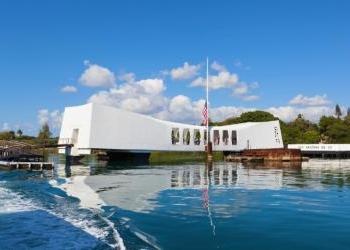
Pearl Harbor Day and the Pearl of Great Price

From http://el-paso.ucg.org/ or call 1-888-886-8632. Please follow this site here.

Pearl Harbor Day, 70 years later, December 7, 2011.
December 7, 1941, was the worst day in U.S. military history as a Japanese armada of ships and planes made a devastating surprise attack on Pearl Harbor. This Hawaiian U.S. naval base was a tempting target for the imperialist Japanese since America’s entire Pacific Fleet was headquartered at Pearl. The Japanese met little resistance as their planes bombed and strafed U.S. Navy ships and Army aircraft.
The next day the President Franklin Roosevelt addressed the U.S. Congress and delivered what turned out to be the most famous American political speech of the 20 th century—the “Day of Infamy Speech.” Congress then declared war on Japan, and three days later it declared was on Nazi Germany.
The United States, by being unprepared for this attack, paid a very heavy price:
- 2,388 Americans died in the attack
- 1,178 Americans were wounded
- 21 American ships were sunk or damaged
- 323 American aircraft were destroyed or damaged
The Japanese paid a dear price but not nearly so great:
- 64 Japanese died during the attack, though the number of injuries is unknown
- 5 Japanese ships were destroyed
- 103 Japanese aircraft were destroyed or damaged
The U.S. paid the greater short-term price but Japan paid the greater long-term price. If much more time had gone by without the U.S. getting involved militarily, both the Japanese and the Nazis might have been victorious in their conquests. Quite likely, God allowed the Pearl Harbor bombing to awaken America to join the war against Japan and Germany.

Some inspiring facts

The Japanese failed to accomplish their primary objective when they bombed Pearl Harbor. They wanted to destroy the aircraft carriers, but the three carriers were all at sea away from the port at the time. Those carriers were critically important in the ensuing war against Japan. and at the same time protected the aircraft carriers. Sparing those carriers was also likely an act of Providence.
Lately several websites have posted a message which had also been sent around the world by e-mail. It supposedly is an excerpt from a book titled, “Reflections on Pearl Harbor” by Admiral Chester Nimitz. Although it sounds like it could have been authored by Admiral Nimitz, I have not been able to verify that such a book exists. However, I did verify most of the facts stated. Following is my summary of that message:
Immediately after the Pearl Harbor attack, President Roosevelt appointed Admiral Chester Nimitz to be the Commander of the Pacific Fleet.
When Nimitz landed at Pearl Harbor on Christmas Eve, 1941, there was such a spirit of despair, dejection and defeat—you would have thought the Japanese had already won the war. On Christmas Day, 1941, Adm. Nimitz was given a boat tour of the destruction wrought on Pearl Harbor by the Japanese.
Afterwards, someone asked him, ‘Well Admiral, what do you think after seeing all this destruction?’ Admiral Nimitz's reply shocked everyone: ‘The Japanese made three of the biggest mistakes an attack force could ever make, or God was taking care of America.’
Nimitz explained:
Mistake number one: The Japanese attacked on Sunday morning. Nine out of every ten crewmen of those ships were ashore on leave. If those same ships had been lured to sea and been sunk, we would have lost 38,000 men instead of 3,800.
Mistake number two: When the Japanese saw all those battleships lined in a row, they got so carried away sinking those battleships, they never once bombed our dry docks opposite those ships. If they had destroyed our dry docks, we would have had to tow every one of those ships to America to be repaired. As it is now, the ships are in shallow water and can be raised. One tug can pull them over to the dry docks, and we can have them repaired and at sea by the time we could have towed them to America. And I already have crews ashore anxious to man those ships.
Mistake number three: Every drop of fuel in the Pacific theater of war is on top of the ground in storage tanks five miles away over that hill. One attack plane could have strafed those tanks and destroyed our fuel supply. That's why I say the Japanese made three of the biggest mistakes an attack force could make, or God was taking care of America.”
Whether or not Admiral Nimitz said those exact words, it’s obvious that this disaster could have been much, much worse.  God has been very merciful to the United States and to freedom-loving people in general.

The “pearl of great price”

Pearl Harbor has a nice name. It originally had a native Hawaiian name which meant “Water of Pearl.” The harbor was teeming with pearl-producing oysters until the late 1800’s.
One of the most famous and popular Bible passages is Matthew 13:45-46, in which Jesus said, “Again, the kingdom of heaven is like a merchant seeking beautiful pearls, who, when he had found one pearl of great price, went and sold all that he had and bought it.”
The naval base at Pearl Harbor has been and still is extremely valuable for the United States. It would have been extremely valuable for the Japanese had they been able to conquer and hold it.
But the combined value of that that harbor, that real estate, the military facilities, the ships and planes, and the strategic location are a tiny pittance compared to the value of life after death—life in the Kingdom of God forever and ever! Every sacrifice that we ever need to make in this life will be a small price to pay for glorious eternal life!
The “good news” is this: All those who died on December 7, 1941—and at all other times and places—will yet have their opportunity to learn God’s truth and to qualify for God’s Kingdom! With Jesus Christ reigning over all the earth, we will at last have peace on earth!
Someday all peoples will have the opportunity to attain “the pearl of great price”!

You might also be interested in...

Tuesday, May 24, 2016

Moral Leadership Does It Really Matter?

From http://el-paso.ucg.org/ or call 1-888-886-8632. Please follow this site here.

Does morality matter? In recent weeks and months, the world has been treated to the spectacle of poll after poll showing that, while most Americans disapprove of revelations about the president's private behavior, they approve of his job performance by a wide margin.
Time after time Americans have seen television commentators, legal analysts and people on the street assure us that it's nobody's business what elected officials do in private; the only thing that matters is how they do their job.
Does moral leadership matter? Can lack of moral values and exemplary leadership coexist? What are the consequences of strong political power without a moral foundation?

Where Have All the Leaders Gone?

Nations everywhere seem to be drifting dangerously out of control. Russia is close to economic collapse, its government perilously unstable. Her neighbors, including many of the former Soviet republics, are understandably anxious and nervous. There is nothing quite like a collapsing superpower armed with thousands of nuclear weapons to give cause for concern.
Many Asian countries that were economic powerhouses in the global economy only a few years ago thrown out of work, plummeting overnight from relative prosperity to poverty.
Some Asian countries face food shortages in the coming months. People naturally look to Japan to pull Asia out of its economic straits, but Japan is crippled by its own governmental stalemate and is hardly in a condition to help others.
Nearby, India and Pakistan rattle their newly developed nuclear sabers at each other while Iraq and Iran quietly pursue the development and acquisition their own nuclear, chemical and biological arsenals. Meanwhile, much of Africa remains mired in perpetual poverty, crippled by corrupt and incompetent leadership.
The list of world problems goes on and on. At a time of many global crises, where have our leaders gone?
The generation of leaders forged in the fires of the Great Depression, World War II and the Cold War has largely passed from the scene. In the last two U.S. presidential election, voters chose telegenic baby boomer Bill Clinton over World War II veterans George Bush, a former U.S. Navy carrier pilot; and Bob Dole, a former infantry officer who lost the use of an arm on a battlefield in Italy.
The Daily Mail of London recently headlined an article, “Where Is the Leader We So Badly Need?” It observed: “It seems hard to believe that only ten years ago we still enjoyed the authoritative certainties of Thatcher and Reagan, and that we could still also believe in Gorbachev. That now seems a vanished world, about as distant from our present discontents as the era of Bismarck and Disraeli.”
Times have changed and not for the better. If this is what we can expect from our current crop of administrators and heads of state, what will be the quality of the next generation to assume the reins of leadership?

Good Intentions Aren't Good Enough

For thousands of years nations and their leaders have wrestled to create a government that would provide the most good for the greatest number of people. The longest-lived governments have been monarchies in which absolute power passed from generation to generation within families. Many such dynasties lasted for centuries. Tragically, these were often long-lived simply because of their absolute control over their subjects.
Administrators and forms of governments rise and fall. This century has seen the spectacular rise of a new form of government—communism—and its equally spectacular collapse. Communism promised equality for all. But it was destined to fail because, in rejecting God, it lacked a moral foundation.
History shows that many forms of government have started with good intentions, only to fail as weaknesses become apparent. In most cases the failure came down to the moral downfall of the leader or the general populace. Often, of course, the leader was a reflection of the people—and vice versa.
This is evident in the present American predicament, with poll after poll showing that most Americans want their president—an admitted liar and adulterer—to remain in office.

Tolerance of Evil

What does this say about the American people? As The Times of London observed: “There are many men who belong to Bill Clinton's generation and identify with him … There are many women who are indulgent towards his sexual escapades. There are many black people who see him as a sympathetic President. These people do not want to believe the evidence; they want to explain it away.”
Economist and writer Thomas Sowell noted remarkable ironies and inconsistencies coming to light in the reactions of the American people to revelations of presidential behavior.
“… The polls of the past several months make it hard to be optimistic about the American public's understanding of the society in which they live or the dangers in that kind of society,” he wrote. “Consider some polls. The public has a far more negative view of Monica Lewinsky than Bill Clinton. Since it takes two to tango, why would you blame one more than the other—and especially the one who is younger and who has no power and no responsibility to the nation at large?
“[Special prosecutor] Kenneth Starr's approval ratings have barely made it out of the single digits. He is far more disliked for bringing out the truth than Bill Clinton is for lying … Susan McDougal's stonewalling on Bill Clinton's part in the Arkansas fraud has been magically transformed into something noble by the media. More important, the public has bought it. Hey, obstruction of justice is not so bad if she's a spunky gal …
“What will matter very much—and perhaps tragically—is if the public has degenerated to the point where it can only react emotionally to what is right under their noses, rather than understand how much this country's freedom and well-being depend on the rule of law.”

Are There Moral Absolutes?

Such findings point not just to a president but a nation dangerously adrift from its moral moorings. The gradual acceptance of moral relativism—that moral absolutes do not exist—shows up in the many comments that it doesn't matter what the president does in his private life, that it's nobody's business, or it's just between him and his wife.
Such sentiments ignore a leader's fundamental responsibility to properly lead his people. What does it say when the nation's highest elected official, the head of the executive branch of the U.S. government, charged with enforcing the laws of the land, is accused of numerous felony offenses? More important, what does it say about a people and other government officials willing to excuse such behavior?
Some 4,500 years ago another nation faced a crisis of government. Shaking off the shackles of slavery, that nation had the opportunity to do things right. Its people were promised peace, stability and prosperity in their homeland if they would build upon a proper moral foundation.
After giving the ancient Israelites His law—the national constitution that would ensure the blessings of peace and prosperity—God exclaimed, “Oh, that they had such a heart in them that they would fear Me and always keep all My commandments, that it might be well with them and with their children forever!” (Deuteronomy 5:29). God knew their adherence to this moral foundation would be key to their success and survival as a nation.
God understood the crucial role of leaders in a nation's success. He literally laid down the law to the Israelites; He gave specific instructions for the nation's head of government was to follow to keep it on the moral path.
“… When he has taken his place on the seat of his kingdom,” God instructed Israel concerning its head of state, “he is to make in a book a copy of this law … And it is to be with him for his reading all the days of his life, so that he may be trained in the fear of the Lord his God to keep and do all the words of this teaching and these laws: so that his heart may not be lifted up over his countrymen, and he may not be turned away from the orders, to one side or the other: but that his life and the lives of his children may be long in his kingdom …” (Deuteronomy 17:18-20, Bible in Basic English).
Adherence to this law, God promised, would result in national leaders who would not exalt themselves—would not be “lifted up”—over their people, men who would fear God and lead their people in righteousness and truth by example.

Influence on a Nation

Speaking through the prophet Isaiah around the time of the downfall of the kingdom of Israel, God noted that evil had spread through all levels of Israelite society. “The whole head is sick, and the whole heart faints. From the sole of the foot even to the head, there is no soundness in it, but wounds and bruises and putrefying sores …” (Isaiah 1:5-6).
God identified the nation's leaders as the source of corruption. Rather than providing proper leadership, they were leading the kingdom to destruction. “For the leaders of this people cause them to err, and those who are led by them are destroyed” (Isaiah 9:16).
Through the prophet Jeremiah, God added this sad footnote: “An astonishing and horrible thing has been committed in the land: The prophets prophesy falsely, and the priests rule by their own power; and My people love to have it so …” (Jeremiah 5:30-31).
People had not only come to accept corrupt leadership, but to love it. In God's view, this was “astonishing” and “horrible.”
For their sins, God allowed His people to be taken into captivity. The prophet Hosea condemned the “spirit of harlotry” that turned them from God (Hosea 5:4). Their leaders failed them miserably. Rather than providing moral guidance and proper example, they appealed to people's base instincts and impulses. The result was national disaster.

Danger Signs

Abraham Lincoln recognized that the greatest dangers to a nation often come not from external threats, but from within. “At what point then is the approach of danger to be expected?” he asked. “I answer, if it ever reach us, it must spring up amongst us; it cannot come from abroad. If destruction be our lot we must ourselves be its author and finisher” (emphasis added).
We are witnessing a national debate over right and wrong, whether adultery and lying are serious crimes and sins and whether they can be glossed over because of the popularity of the perpetrator. Where will it lead? If Bible prophecy is an indicator, conditions like those that Isaiah and Jeremiah described are likely to be the outcome.
Paul, describing trends leading up to Jesus Christ's return, wrote: “But be certain of this, that in the last days times of trouble will come. For men will be lovers of self, lovers of money, uplifted in pride, given to bitter words, going against the authority of their fathers, never giving praise, having no religion, without natural love, bitter haters, saying evil of others, violent and uncontrolled, hating all good, false to their friends, acting without thought, lifted up in mind, loving pleasure more than God …” (2 Timothy 3:1-4, Bible in Basic English).
Paul describes an utterly self-centered society in which people have no regard or use for moral values. Rejecting God's standards of conduct, they will set their own standards using their own reasoning—reasoning that ultimately leads to suffering and death (Proverbs 14:12; 16:25).
Such a society may not be long in coming when Americans find reasons to excuse adultery and lying and alleged perjury and obstruction of justice in their highest elected official. In fact, we might ask ourselves if it isn't already here.

A Different Kind of Leadership

Regardless of how bleak and uncertain conditions look on the national and world scene, God gives us encouragement. He promises a future government vastly different from any we know today.
Regrettably, although the specific accusations are unprecedented, the leadership crisis affecting the United States is not. All too many leaders succumb to the seduction of power and office. Some use them to enrich themselves and a circle of friends and associates. Some use their authority to oppress others. Some allow prestige and honor to warp their perceptions, leading them to believe they deserve power and rule over others. These are problems typical of powerful leaders.
But it will not always be this way. “You see that the rulers of the Gentiles are lords over them, and their great ones have authority over them,” said Jesus Christ to some who were eager to rule over others. “Let it not be so among you: but if anyone has a desire to become great among you, let him be your servant; and whoever has a desire to be first among you, let him take the lowest place: even as the Son of man did not come to have servants, but to be a servant, and to give his life for the salvation of men” (Matthew 20:25-28, BBE).
Jesus burst the bubble for His disciples. Rather than using power to gain more power and prestige for themselves, to put themselves above other men and women, Christ said that true leadership has one purpose: to serve others. This kind of leadership, He said, differs from the way most humans react when given power over others.
Jesus Christ exemplified that kind of true leadership. He taught people the solid foundation of God's law, which would help them avoid suffering the painful consequences of sin. He encouraged them to surrender to God in heartfelt repentance, no longer to live only for their selfish desires. He exemplified what it means to dedicate one's life to serving others.

Promise of True, Righteous Leadership

He also brought a message of a transformed world to come—an earth extraordinarily changed by the arrival of the Kingdom of God (Mark 1:14-15; Luke 8:1). This kingdom, He said, would come at the climax of a series of earth-shattering events (Luke 21:31) during which all human life would be in peril (Matthew 24:21-22).
This kingdom is destined to replace all human kingdoms, governments and authority (Revelation 11:15; Daniel 7:14). In this kingdom, Jesus Christ will reign forever as “King of Kings and Lord of Lords” (Revelation 19:16).
But He will not rule alone. Others will reign with Him in His kingdom (Revelation 20:4, 6). He will be joined by God's faithful servants (2 Timothy 2:12), men and women who have dedicated themselves to learning and practicing godly rulership as defined and exemplified by Jesus Christ.
Resurrected to eternal life (Revelation 20:6), they will help administer God's righteous government in paradise on earth in service to mankind.
God is fully aware of the weaknesses and peccadilloes of people, regardless of their lot in life. He knows we have all sinned (Romans 3:23), but He extends forgiveness and the power to transform our lives and minds (Romans 12:2). If we are willing to make that commitment, He invites us to share in true leadership in His Kingdom. GN

You might also be interested in...