Showing posts with label London. Show all posts

Friday, September 9, 2016

World News and Trends Britain vulnerable to Iranian-sponsored terrorism

From http://el-paso.ucg.org/ or call 1-888-886-8632. Please follow this site here.

Noted British columnist Melanie Phillips has alerted London to the indigenous dangers posed by Hezbollah. She pointed to its Islamic designation as the so-called Army of God, “a military force funded, trained by and answerable to the Islamic Republic of Iran”—a nation pledged to “the destruction of Israel and the genocide of the Jews, as a prelude to destroying the West and infidels everywhere” ( The Spectator, Aug. 5).
The Islamic Human Rights Commission [IHRC] in the United Kingdom encourages Muslims in Britain to supply Hezbollah with “financial, logistical and international support” in its attacks on Israel.
And Britain itself is still a target, as recent events at Heathrow Airport have shown. Recently Iran 's president Mahmoud Ahmadinejad said on TV that ” England was the founder of this sinister regime”—meaning Israel—and was “an accomplice to all of its crimes” (ibid.)
British Jews may be even more vulnerable than the general public. The Times stated, “The Jewish community in Britain is facing a wave of anti-Semitism as a result of the conflict in Lebanon ” (Aug. 8). The Jewish Chronicle referred to it as a “wave of intimidation.” Already occurring are abusive telephone messages, hate mail to Jewish organizations and various incidents like the name Hezbollah being painted near one of Glasgow 's synagogues.
The stakes are high for the whole Western world. As British Member of Parliament Michael Gove wrote: “Western failure to support Israel will have global consequences . . . When the West fails to offer an appropriate defence of Israel it succeeds only in undermining its own long-term security” ( The Times, Aug. 4).
Melanie Phillips concluded her article with these somber words: “But if Israel were to lose to Iran, it would herald a catastrophe for the entire world.” (Sources: The Spectator, The Times, The Jewish Chronicle [all London].)

You might also be interested in...

Thursday, July 7, 2016

Opinion Changing About Refugee Influx

From http://el-paso.ucg.org/ or call 1-888-886-8632. Please follow this site here.

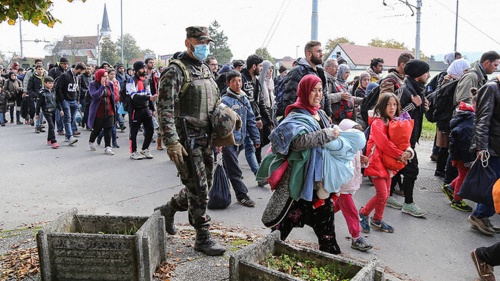
Last month more than 200,000 Muslim refugees entered into Germany fleeing from war-torn areas in their homelands. German Chancellor Angela Merkel surprised her nation and those watching worldwide by claiming there was “no upper limit” to help those seeking asylum in their peaceful country.
Many of the refugees are fleeing Syria, whose civil war has been escalating since 2011. Chemical weapons were even used at one point in the conflict by the Assad regime, which had the world up in arms over such inhumane warfare. Syria is dealing with fighting on many fronts. There is an uprising against President Bashar al-Assad, and there are those who are fighting against ISIS.
After seeing the masses arrive, German public opinion is changing about Merkel’s decision. A big concern for Germans is how the new refugees will assimilate into their nation. The Economist recently reported, “Germans worry whether Muslim refugees will accept German norms of sexual equality, secularism and Germany’s special responsibility towards Israel and Jews” (“Merkel at Her Limit,” Oct. 10, 2015).
The cultural differences between the refugees entering a modern nation like Germany will have an interesting impact on many aspects of the European nation. Germany has been one of the most financially sound members of the EU. How will the influx of five or eight hundred thousand refugees impact the nation that has bailed out fiscally less responsible nations? How will the culture of progressive Germans and convicted Muslims clash?
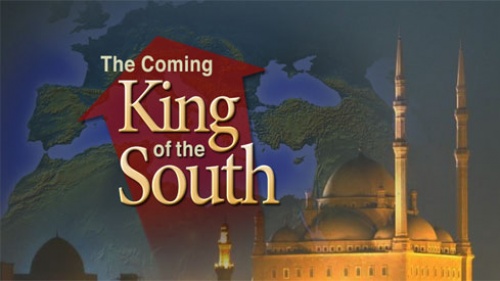
In the last few years we have seen Europe joined together by currency–nearly bankrupt by struggling economies of some members, and now this influx of immigrants brings a new layer to the potential for economic strain on the economy. We see in Daniel 11 that there will be push between the king of the South and the King of the North. Could this be setting the stage for animosities between the regions?
We look to God and his coming Kingdom for a time of peace. When all peoples of the world will worship God and His Son Jesus. There will be peace and restoration of all things.

You might also be interested in...

Thursday, June 23, 2016

First the End of an Empire - Now, the End of Britain?

From http://el-paso.ucg.org/ or call 1-888-886-8632. Please follow this site here.

I can still remember when the news came over the radio. It was a Sunday morning in late January 1965. Sir Winston Churchill had died.

His funeral was the following Saturday. He was only the second commoner in the history of Great Britain to be given a state funeral, normally reserved for royalty. The first had been for the duke of Wellington, the military genius who thwarted Napoleon’s plans for world conquest at the Battle of Waterloo in 1815, thereby ushering in a century of Pax Britannica. Sir Winston had defeated an even greater evil, Hitler’s Third Reich. He didn’t do it single-handedly, of course, but without him the outcome could have been entirely different.

I also well remember the silence after the funeral. It was the only time I can remember all the television and radio stations closing down for a period of silence in honor of the great old man to whom Britons owed so much.

People were truly thankful that Winston Churchill had led them to victory in World War II—at a time when everybody else seemed inclined to compromise with Nazi Germany.

Churchill rejected the honor of a dukedom and turned down the opportunity to be buried in Westminster Abbey along with many other famous Britons.

Churchill’s funeral was, for Britain, the end of an age.

Ironically, his death came at the end of a 20-year period that had seen the nation reject just about everything he stood for.

Postwar Britain

It had started 20 years earlier, shortly after VE Day. With the European war ended, Churchill called an election. Almost everyone thought his Conservative Party would win. People the world over were shocked when the results came in: The Labour (socialist) Party won by a landslide. Although grateful for Churchill’s role as a wartime leader, people had decided they wanted change; they longed for a different world. They didn’t want their young men fighting wars in far-off places they had never heard of, nor did they want them coming home to low-paying jobs or unemployment.

After being universally acclaimed as the British lion that roared in defiance of Hitler and the man who had led Great Britain to victory, Churchill appeared to be headed for victory. But, seemingly, it was time for Britain’s rapid decline to begin. The prophet Daniel reminds us that it is God who “removes kings and raises up kings” (Daniel 2:21). The same God who had given Britain its victory took away the empire He had given to them, the multitude of nations promised to Joseph’s son Ephraim (Genesis 48:19).
The next few years saw massive changes, including the nationalization of key industries (steel, railways, coal mines) and the institution of a government-run medical system. To concentrate on these radical reforms, the country turned its back on an empire that had been built up over the course of 400 years. Britain granted India and Pakistan independence in 1947. By the time of Churchill’s death, all the major colonies were gone. Britain had, to quote American statesman Adlai Stevenson, “lost an empire and not yet found a role.”

It might have been different if Churchill had won that pivotal election. He was an empire loyalist. His love of history taught him that Britain’s security lay with the multitude of nations it had built up gradually since the time of Queen Elizabeth I. Later, after he won the 1951 election as prime minister at the time of the accession of Queen Elizabeth II, he talked of a “new Elizabethan age” that might surpass the first in greatness. But it was not to be.

Britain had embarked on a new course that continues to this day. With the British Empire gone, it was Britain’s turn to be dismantled.

The abolition of Britain

A thought-provoking book on this subject by British writer Peter Hitchens, The Abolition of Britain, contrasts the country at the time of Churchill’s funeral with the nation 32 years later at the funeral of Princess Diana. By his own account, it is as if he is looking at two different countries.

Outside the British Isles many people get confused at exactly what constitutes Great Britain and where England, Scotland, Wales and Ireland fit into the equation. At one time all four nations were separate entities. Their eventual union came about over a long period.

England conquered Wales during the time of Edward I in the 13th century. Edward proclaimed his son the prince of Wales, emphasizing that Wales is a separate principality, but was to be administered as a part of England. For 700 years, the heirs to the British throne have been given the title “prince of Wales.”
Scotland and England (with Wales) united later. When Elizabeth I died in 1603, she left no heirs. Historically, Scotland had often allied itself with France against England. It was time for the two countries to unite so this would not happen again. Upon her death her cousin’s son, James VI of Scotland, became King James I of England. James gave the country its new name, Great Britain (and was instrumental in giving the world the King James Version of the Bible). The new flag was nicknamed the Union Jack after him.

The two kingdoms were still administered separately, but they had the same monarch. A century later (1707) they fully united under one parliament, giving Scots a share in the benefits of the growing empire. Another century later the Irish parliament was abolished, and the United Kingdom of Great Britain and Ireland formed (1801).

Reversal of direction

The dismantling of the kingdom actually began 80 years ago when most of Ireland was given its independence as the Irish Free State, theoretically still subject to the crown. In 1949 the Free State became the Irish Republic, severing its tie with the United Kingdom.

The six counties of Northern Ireland that have remained within the United Kingdom have been strife-torn for more than three decades. Although in recent years strenuous efforts have been made to negotiate a permanent peace, the problem remains virtually insoluble. At some point it is likely that another “reform” government in London will force a change on the province, as British governments since Churchill’s time have eventually given in to terrorists in every disputed territory.
With increasing support for Scottish and Welsh nationalists, the present British government, led by Prime Minister Tony Blair, came to power in 1997 promising “devolution.” The two ancient Celtic peoples would acquire their own parliaments and be responsible for their own internal affairs. London would still conduct foreign policy. Both Scotland and Wales now have their own assemblies with increased calls for full independence.

Some of the English, meanwhile, are resentful of the fact that they do not have their own parliament. Scots, Welsh and Northern Irish members still sit in the House of Commons in London and can vote on legislation that affects the English people, while the English people do not have a say in the internal affairs of the Celtic nations around them.
Meanwhile, the European Union (EU) has been fulfilling its dream of an ever-closer union. The Irish Republic has benefited from its membership in the EU, ironically partly subsidized through Brussels by U.K. taxpayers. This has reduced some fears of Irish unity in the North. The South had always been poor, the North far wealthier, so even Catholics had been somewhat apprehensive of unity with the South. Not any more.

Polls show the English to be increasingly weary of the EU. Scottish nationalists, however, see the EU as increasing the likelihood of Scottish independence. No longer would the five million people of an independent Scotland be unable to make it economically on their own. Within the EU they would prosper, just like Ireland and other small countries. Similar feelings are evident in Wales.

In coming years the English could find themselves outside of a politically unified EU, with the Scots, Welsh and Irish inside. Queen Elizabeth I’s worst nightmare would have come true, four centuries later, of an England surrounded by hostile nations in alliance with the continental powers.

Historians such as Norman Davies think that none of this matters. In his recent book The Isles he reminds readers that England at one time was physically a part of the European landmass. At other times it was a part of Europe. It was the westernmost province of the Roman Empire from A.D. 43 to 410, a span of almost four centuries. The English church was a part of the Roman church for almost 1,000 years. The Plantagenets in the Middle Ages ruled England as well as parts of France, spending most of their time in the bigger and warmer part of their territories.

But Paul Johnson, another British historian, sounded a warning in the pivotal year 1972 (between the British Parliament’s vote to join Europe and Britain’s accession the next January): “Disunity has always proved fatal to the offshore islanders.” (The Offshore Islanders was the title of his book dealing with Britain’s relationship with Europe throughout history.) In other words, the disuniting of the United Kingdom has always proved fatal, enabling hostile powers to invade the country. Why should it be different this time?

Biblical wisdom holds true: “Every kingdom divided against itself is brought to desolation, and every city or house divided against itself will not stand” (Matthew 12:25).

New generation, new outlook

A new generation is in power now.

Mr. Blair, British prime minister, prefers to identify with a new age. He is the first British prime minister who does not remember Winston Churchill. In a speech just before the election that brought him to power, he described himself this way: “I am a modern man. I am a part of the rock and roll generation—the Beatles, colour TV, that’s the generation I come from” (The Abolition of Britain, paperback edition, p. xix).
The current generation is a victim of revisionist history. It’s a history with an emphasis on multiculturalism, which downplays Britain’s role in frequently leading its empire into conflict against despotic European powers that wanted to conquer the world. At the same time, the revised version of history emphasizes the mistakes Britain made, negatively presenting the empire as a shameful era.

It’s also a generation that, as in the United States and other Western countries, has grown up with an emphasis on material values, with little concept of morality and often lacking any knowledge of God.

Writing of “the end of Britain” in Newsweek magazine (July 10, 2000), columnist George Will reminded readers of the late English writer George Orwell’s dismissive comment on English intellectuals: “England is perhaps the only great country whose intellectuals are ashamed of their nationality.” (Orwell died in 1950 before this disease spread to the United States.)

Mr. Will added, “Many Europhiles are English intellectuals of the sort George Orwell despised because they despised their nation.” It’s hard to understand the hatred so many people have for the old values Sir Winston Churchill symbolized. “God, king and country” have no place in the minds of many, including many English intellectuals.

Does this matter to Americans and the rest of the world?

Let George Will have the final say: “What is vanishing, and not slowly, is the nation to which the United States traces much of its political and cultural DNA. Unless this disappearance is resisted, and reversed, soon all that will linger… will be a mocking memory of the nationhood that was the political incarnation of a people who (as has been said), relative to their numbers, contributed more to civilization than any other people since the ancient Greeks and Romans” (ibid.).

Recommended reading

What’s behind the remarkably rapid dissolution of the British Empire? How—and why—did the world’s greatest empire disappear in only a few short decades? Does Bible prophecy give us any indication?

Strange as it may sound, this remarkable turnaround was written well before it happened—in the pages of the Bible almost 3,500 years ago.

The publishers of Virtual Christian Magazine have produced an astounding, eye-opening booklet, The United States and Britain in Bible Prophecy. You’ll be amazed to learn the truth about where these nations appear in Bible prophecy—and what Scripture says will happen to them in the end time.
 

You might also be interested in...

Wednesday, June 22, 2016

LONDON: Appeasement in the Face of Danger Deadly Parallels

From http://el-paso.ucg.org/ or call 1-888-886-8632. Please follow this site here.

After the July 7 terror bombings on three London Underground (subway) trains and one of the city’s famous double-decker buses, Western leaders were quick to recount memories of the resolve of Londoners during the World War II blitz on the city by the German Luftwaffe. The blitz isn’t the only comparison one can draw with the Second World War. Another is the matter of appeasement. For much of the decade preceding the September 1939 German invasion of Poland that precipitated World War II, Winston Churchill was warning of impending calamity. He was largely ignored, criticized as a warmonger and kept out of government. This period came to be known as the famous statesman’s “wilderness years.” But he was right. Just one year before the outbreak of war, British Prime Minister Neville Chamberlain sat down and talked with Adolf Hitler in Munich, purportedly receiving his assurances that he would stop his aggression. Returning to Britain, waving a piece of paper in his hand as he came down the steps of his airplane, Chamberlain proclaimed “peace in our time.” He had appeased Hitler by giving in to Germany’s annexation of Czechoslovakia, trusting things would end there. But all he did was buy time while Hitler grew stronger. The apostle Paul warned of such delusion: “For when they say, ‘Peace and safety!’ then sudden destruction comes upon them …” (1 Thessalonians 5:3). While this prophecy specifically applies to the global state of deception just preceding the coming Day of the Lord, the principle is always at work: The subtle spirit of appeasement blinds people to the truth, leading to serious, often fatal, misjudgments. For some time now too many Western leaders today have been making similar mistakes in the war on terrorism. As the threat to Western civilization has mounted, they have often been in the dark, blinded by political correctness, unable to see the stark threat that faces us all. Occasionally there’s a voice like Churchill’s crying in the wilderness, but too often it’s been quickly smothered by the politically correct mantra that all religions and cultures are essentially equal and can live peaceably side by side. Attitudes leading up to and in the immediate aftermath of the London bombings are a case in point. “Islam and terrorism don’t go together” Two days after the London bombings, Charles Moore, former editor of London’s Daily Telegraph, wrote an article for the paper July 9 in which he asked the question: “Where is the Gandhi of Islam?” He commended Londoners for their stoicism and the emergency services for their magnificent work, but then wrote the following astute paragraph: “Yet there seems to me to be a radical disjunction between our heroic capacity to deal with the immediate effects of terrorism and our collective refusal to confront what lies behind it. The effects of this disjunction are, literally, fatal.” Mr. Moore quoted the deputy assistant commissioner of the London metropolitan police, Brian Paddick, who, when asked about the nature of the terrorists, said: “Islam and terrorism don’t go together.” Mr. Moore comments on this statement: “It is true that the vast majority of Muslims are not terrorists, or involved in terrorism, and this needs to be said strongly if people assert otherwise. But if the Metropolitan Police really believe what Brian Paddick says, if they really, truly think that the words ‘Islam’ and ‘terrorism’ must not be linked, then we have little hope of catching the killers, of understanding how the terrorism works, or of preventing new atrocities.” Mr. Moore adds a very perceptive thought: “What strikes one again and again about the reaction of the public authorities, of commentators, of the media, is the terrible lethargy about studying what it is we are up against. We are dealing with an extreme interpretation of one of the great religions of the world. “We flap around, looking for moderates and giving them knighthoods, making placatory noises, putting bits of Islam on to the multi-faith menu in schools, banishing Bibles from hospital beds, trying to criminalise the expression of ‘religious hatred,’ blaming George Bush and Tony Blair.” In other words, we have practiced appeasement as a previous generation did in the years leading up to World War II. He continues: “But if we do not know the way the faith in question works, its history, its quarrels, its laws and demands, we will not have the faintest chance of distinguishing the true moderate from the fellow-traveller or of bearing down on the fanaticism.” Dangerous ignorance of religion and history It’s not surprising that the British people are ignorant of Islam. The average citizen today is almost as ignorant about Christianity. After two devastating world wars, Britons abandoned practicing Christianity in droves, holding onto it in name only. Church attendance plummeted. Having rejected the Bible as the standard for religious and moral absolutes, people rapidly accepted a new standard—that of multi-culturalism and political correctness. According to this standard, all religions, cultures, creeds and ideas are morally equal and not to be criticized. There is no absolute right or wrong; no one can judge another’s beliefs and actions. After decades of swimming in this sea of political correctness and multiculturalism, most people today genuinely believe that there is little or no difference between various religions. They have become spiritual appeasers, no longer able to discern right from wrong, truth from error, safety from danger. They know little or nothing about the Bible or the Koran. This was not the case with previous generations of Englishmen. American historian Benson Bobrick wrote about the incredible enthusiasm the English people had for the Word of God in past centuries. “Englishmen carried their Bible with them—as the rock and foundation of their lives—overseas,” wherever they went (Wide as the Waters, 2001, p. 12). Canadian historian Jacques Barzun wrote that this enthusiasm for the Bible “did not cease for 350 years. 1900 was the first year in which religious works (at least in England) did not outnumber all other publications” (From Dawn to Decadence, 2000, p. 10). The same enthusiasm could be found in the United States at the time. The July 10 Lansing State Journal noted that at the Michigan State University campus in East Lansing, excavations are taking place at the site of one of the first student dormitories, called “Saints Rest,” which was “named by students after a popular Christian devotional of the time” in 1856. Less than 150 years later our most prestigious universities reject the Word of God and teach secular values to our young people. They have lost their spiritual moorings in a world floundering spiritually because it has discarded biblical standards. The Old Testament prophet Hosea wrote to modern-day Ephraim, the British people who formed the “multitude of nations” foretold in Genesis 48:19. Through Hosea, God tells us, “My people are destroyed for lack of knowledge” (Hosea 4:6, emphasis added throughout). This is not knowledge of the physical universe, but knowledge of who we are, why we are here, and God’s eternal standards that show us how to succeed in relationships, both individually and at the national level. How well that describes so much of the Western world today. Rejecting the timeless truths and standards of the Bible has set our peoples up for destruction. Not understanding the truths of God only causes spiritual confusion and leads to acceptance of false religions and philosophies which, in turn, lead to ever-increasing problems, conflicts and dangers. Hosea 7:8-9 adds: “Ephraim has mixed himself among the peoples [embraced other cultures and religions as equally valid with the true faith of the Word of God] … Aliens [people who worship other gods] have devoured his strength, but he does not know it.” Ancient Ephraim had the same problem modern Britain and other Western countries have today without knowing it. They have been blinded, thinking that accepting all religions and cultures as equal is a strength when too often it sows the seeds of social and cultural disintegration. The enemy within Imagine if, in World War II, one in eight Londoners was a German. This would have complicated the situation alarmingly. Today, one in eight Londoners is Muslim, many of whom are second-generation British residents. It is becoming increasingly evident that some have been recruited for terrorism from their number, especially from militant mosque congregations. Three of the four London suicide bombers were second-generation Britons born to Pakistani parents (the fourth was a Jamaican-born immigrant to Britain and a Muslim convert). The first of the men arrested for the unsuccessful July 21 bombings had immigrated to Britain from Eritrea with his parents at age 14. In spite of a prison sentence for knifepoint muggings as a teenager, he had been granted British citizenship and given some $60,000 in welfare payments over recent years. Another of the suspects arrested for the failed bombings had also been on welfare and lived in government housing. All four suspects had moved to Britain as children or teenagers and apparently were radicalized and moved to terrorist acts after moving there. Richard Reid, who in December 2001 attempted to blow up a transatlantic American Airlines flight with explosives hidden in his shoe, was born in a London suburb to an English mother and a Jamaican father. He had converted to Islam while in prison. Ahmed Omar Saeed Sheikh, sentenced to death in Pakistan for the 2002 kidnapping and beheading of Wall Street Journal reporter Daniel Pearl there, was a London native and former student at the London School of Economics, born in Britain to Pakistani immigrant parents. In April 2003, two British citizens, Asif Mohammed Hanif and Omar Khan Sharif, carried out a suicide-bomb attack in Mike’s Place, a Tel Aviv nightspot frequented by many Americans. Sons of Muslim immigrants, the bombers had been recruited by the terror group Hamas in Britain and entered Israel using their British passports. Recent articles on terrorism in Iraq highlight that many of the insurgents are second-generation Muslims recruited from Western Europe—their parents were immigrants from the Middle East and North Africa, but they were born in Europe. Iraq and Britain aren’t the only places where Western-born converts to violence have emerged. Mohammed Bouyeri, convicted of shooting Dutch filmmaker Theo van Gogh on an Amsterdam street before nearly beheading him, had lived all his life in Holland since his birth there to Moroccan-immigrant parents. “What moved me to do what I did was purely my faith,” Bouyeri explained in confessing the killing. “… I was motivated by the law that commands me to cut off the head of anyone who insults Allah and his prophet.” Some Muslim leaders have spoken out and strongly condemned such acts, particularly in the wake of the London bombings. Yet these realities raise serious questions about the ideals of multiculturalism, including the widely held conviction that second-generation immigrants are fully assimilated and identify with their new country. Two days after the second round of London bombings failed, London’s Telegraph published results of a survey of attitudes among Britain’s Muslims illustrating the magnitude of the problem. “The sheer scale of Muslim alienation from British society that the survey reveals is remarkable,” stated the article’s author, Anthony King, professor of government at Essex University. “Although a large majority of British Muslims are more than content to make their home in this country, a significant minority are not,” he continued. He explained that almost of third of those surveyed believe that “Western society is decadent and immoral and that Muslims should seek to bring it to an end.” He further found that “nearly one British Muslim in five, 18 per cent, feels little loyalty towards this country or none at all.” In terms of numbers, this means that “well over 100,000 British Muslims feel no loyalty whatsoever” toward Britain. Perhaps most ominously, he reported that “one per cent, about 16,000 individuals, declare themselves willing, possibly even eager, to embrace violence” (“One in Four Muslims Sympathises With Motives of Terrorists,” July 23). Western leaders in denial While Prime Minister Blair and President Bush express their commitment to advance democracy in the Middle East, they should take note of the threat at home to Western ideals of democracy. Charles Moore, the former Daily Telegraph editor cited earlier, continued in his piece: “I have beside me an article that appeared during our recent [May] election campaign in Muslim Weekly [London]. By Sheikh Dr Abdalqadir as-Sufi, it calls for the replacement of British parliamentary democracy with ‘a new civilization based on the worship of Allah,’ attacks the Conservatives for being ‘in the hands of an illegal Jewish immigrant from Romania’ and speaks of the ‘near-demented judaic banking elite.’ “… Last year, [London mayor Ken] Livingstone extended a warm welcome in London to Yusuf al-Qaradawi, a mainstream, world-famous spiritual leader based in Qatar. Qaradawi has supported suicide bombing against Israelis, the treatment of all Jews as legitimate targets, the whipping of homosexuals and the killing of all Americans—civilian and military—in Iraq.” There’s little wonder that the same mayor was in denial over the perpetrators of the London bombings. “This isn’t an ideology, it isn’t even a perverted faith, it’s mass murder,” Mr. Livingstone was quoted as saying in London’s Financial Times July 8. The bombings were unquestionably mass murder, but the perpetrators certainly appear to have been motivated by both religious ideology and perverted faith. When a terrorist isn’t a terrorist Even the word “terrorist” became controversial in Britain, when it became clear that the BBC would not use the word to describe the bombers, apparently because the broadcaster might lose some of its international audience. According to the organization’s editorial guidelines, “the word ‘terrorist’ itself can be a barrier rather than aid to understanding” (Tom Leonard, “BBC Language That Labour Loves to Hear,” Daily Telegraph, July 13). The BBC also canceled a dramatization of a patriotic British classic from World War I, Greenmantle by John Buchan, a follow-up to the classic 39 Steps. The novel’s heroes thwart a German plan to unite Islamic peoples against the British, a very real threat at the time. The BBC’s decision to cancel was in stark contrast to their refusal to be pressured last year when Christians protested over the showing of the blasphemous London stage play Jerry Springer—the Opera. There’s clearly a double standard of continuing contempt for Christianity and its values, coupled with fear of Islam and a growing inability to say anything critical of this religion, its history or its followers. In the United States, the Public Broad-casting Service (PBS) follows the same philosophy, fearful of critiquing Islam in a documentary special made for the Empires series while being dismissive of Christian beliefs in other documentaries. Failing to see the danger Those of us who are older know that the terrorist attacks of Sept. 11, 2001, on New York and Washington, D.C., of March 11, 2004, in Madrid and of July 7 and 21 in London this year would not have happened 50 years ago. Massive immigration from the Third World, prompted by politically correct government policies, has significantly changed the demographics of Western nations in the last four decades. Britain has long welcomed many immigrants from the Third World, as have many other European countries. Likewise the United States, once a haven for white European immigrants, in recent decades changed its policies to bring in more poor, culturally alien peoples from Asia, Africa and the Middle East who are far less likely to successfully assimilate. Many observers are now—too late—questioning the wisdom of those moves. After the London bombings, a cry immediately arose to change Britain’s practice of granting asylum even to some convicted of or wanted by authorities for religious extremism in their own countries and to expel those who, taking advantage of Britain’s free-speech protections, have argued for the overthrow of Britain’s democracy and the establishment of an Islamic state. For four decades politicians, intellectuals and academic institutions on both sides of the Atlantic have espoused political correctness and multiculturalism, reversing the biblically based beliefs and ideals held by our ancestors since the Reformation. Instead of being thankful for the blessings Almighty God bestowed on the British and American peoples, they blame Western leaders for virtually all the world’s problems. Continually heard on the BBC following the London bombings were questions about how four young men born and brought up in Britain could take the lives of so many, about what made them feel so “alienated” and asking how can Britain and other countries do better in assimilating Muslims. Nobody even considered the possibility that perhaps Islamic and Western values are inherently incompatible, a fact that Islamic nations themselves acknowledge by their refusal to allow non-Muslims to immigrate into their countries. The Dutch politician Pym Fortuyn was one of the first to realize this, pointing out that Islamic values threaten liberal Dutch society. Assassinated in 2002, he paid with his life for the comment. So did Dutch filmmaker Theo van Gogh, mentioned earlier. Perhaps it’s not surprising that BBC employees are careful about criticizing Islam! Do we have the will and wisdom? Clearly the London suicide bombings have caused some Western leaders to awaken to the serious threat that confronts their nations. Hopefully it’s not too late. Rejection of biblical standards and absolutes has had many unforeseen consequences. Lack of discernment—characterized by appeasement in the face of growing danger—has been only one sad result of trying to live apart from the Word of God. In an age of religious confusion, exacerbated by the new ideology of multiculturalism, does the Western world have the will and the wisdom to face up to the real threat that ideological terrorism poses? If not, we can only expect more attacks in the future. While many Western leaders and intellectuals flounder about spiritually, unable to discern the danger, terrorists remain single-minded in their deadly purpose. The prophet Isaiah’s words from more than 2,500 years ago seem so relevant today: “Justice is turned back, and righteousness stands afar off; for truth is fallen in the street, and equity cannot enter. So truth fails, and he who departs from evil makes himself a prey [or, as some references render it, ‘he who departs from evil is accounted mad’]” (Isaiah 59:14-15). Christians, meanwhile, must seek the discernment that can only come from God’s Word and continue to pray fervently for God’s Kingdom to come. Only then will the suffering and violence that plagues our world finally come to an end. GN

You might also be interested in...

Tuesday, June 21, 2016

Koran contest kids get guns, grenades

From http://el-paso.ucg.org/ or call 1-888-886-8632. Please follow this site here.

The prizes in this year's contest? Assault rifles and live grenades!
The station, based near the capital, Mogadishu, awarded an AK-47 assault rifle and the equivalent of $700 to the first-place group. The second-place group received an AK-47 and the equivalent of $500, while those who placed third received two live hand grenades and $400.
The al-Shabab group is linked to al-Qaeda and was recently forced out of Mogadishu, though it still controls much of central and southern Somalia.
“Youths should use one hand for education and the other for a gun to defend Islam,” said al-Shabab official Mukhtar Robow at the prize awards ceremony, held not far from Mogadishu. Pictures of the awards ceremony appeared on a website affiliated with the group.
Winners also received Islamic religious books. Prizes in previous years included a rocket-propelled grenade launcher and anti-tank mines. Somalia has been in the news in recent years due to the twin plagues of drought and piracy, with Muslim pirates preying on shipping and pleasure boats in the Indian Ocean. (Sources: BBC News, The Guardian  [London].)

You might also be interested in...

Friday, June 17, 2016

The European Constitution Sneaks in by the Back Door

From http://el-paso.ucg.org/ or call 1-888-886-8632. Please follow this site here.

Longtime British feature writer Simon Jenkins expressed the United Kingdom’s growing frustration with the EU. He wrote: “The European Union is ghastly. It poisons all it touches. Europe sabotaged Margaret Thatcher’s last government. Europe mugged [former Prime Minister] John Major to death. Now Europe has driven Tony Blair [to act unwisely] in Europe. The protectionist cartel is internally corrupt and externally a menace to global trade and peace. Britain’s leaders are humiliated whenever they try to reform it” ( The Sunday Times, emphasis added throughout). That’s calling a spade a spade. The latest British humiliation consists, over a period of seven years, of losing £7 billion (approximately $12 billion) of the rebate that former British Prime Minister Margaret Thatcher had so skillfully negotiated with the EU. Newspapers (right and left) agreed that the United Kingdom got almost nothing in return for this controversial, “last-minute” concession. At the end of the day, France gave no real ground on the enormous agricultural subsidy payments French farmers regularly receive from the EU. An unexpected development No EU budget deal was expected at the end of Britain’s six-month’s presidency of the European Union. It appeared effectively blocked. But due to the last-minute U.K. rebate “surrender” (apparently without the knowledge of British Chancellor Gordon Brown, who was in Washington, D.C., at the time), a surprise agreement was produced. However, the biggest surprise of the recent summit among all the leaders of EU member nations was Angela Merkel, the new German chancellor. Some EU politicians hailed her as “Europe’s new power broker” as she got the lion’s share of the credit for breaking the budget deadlock. Angela Merkel’s first month at the seat of German power has generally been judged a very good one in both foreign and domestic affairs. The German upper house of parliament just approved a number of tax reforms that will help reduce the budget deficit. Interestingly enough, “She talks passionately about how a coherent and integrated EU is an essential part of making Europe more competitive with the rising economies of Asia” ( Financial Times ). However, this is not the way in which many Britons view the activities of the EU. Progress by stealth Christopher Booker continued his article on the steady loss of British sovereignty to the European Union. “In recent months … the EU has continued stealthily to take over so many of the powers of our government and Parliament from behind the scenes—with full permission and even encouragement from our ministers … “Far from being some kind of setback, the rejection of the new constitution has turned out to be a trigger for one of the EU’s biggest power grabs for decades, across a whole range of policy areas, from defence, immigration and taxation, to the way we run our police, our courts and our judicial system” ( Daily Mail ). For instance, the EU is rapidly forming its own police force. The newly constructed “Europe Police College” is now in position to train senior officers all over Europe—with an outpost already pretty much in place in Hampshire County, England. As well, according to The Daily Express, the European Union is apparently planning a direct tax of 3.5 pence on the pound proposed by current European Commission President, Jose Manuel Barroso. That eventuality will set “the cat among the pigeons.” Also, according to a report in The Sunday Telegraph, the European Commission “effectively insists that the provisions of the Charter [of Fundamental Rights] be enshrined in all new EU legislation.” Reacting swiftly to this turn of events, Chris Heaton-Harris (Conservative member of the European Parliament from Britain) stated: “This shows that the Commission has no intention of taking any notice of the voters in France and the Netherlands, who decisively rejected their blueprint for a federal superstate.” Brussels bureaucrats were further accused of cherry-picking certain parts of the proposed constitution and sending them through the back door. Liam Fox, Conservative British shadow foreign secretary, firmly stated: “I have repeatedly made clear my fear that the EU is determined to ignore the results of the two referenda and instead press ahead with the implementation of many elements of the constitution treaty.” This is not how true democracies (or a genuine democratic union) are supposed to function. But it is exactly how some bureaucracies tend to further their agendas. The Bible and the European Union World News and Prophecy has focused a great deal on the political affairs of Western and Central Europe. The reason is that there exists a prophetic connection between the politics of today’s Europe and catastrophic future occurrences surrounding the existence of what the Bible defines as a “beast” power at the end of this age (Revelation 13). We are apparently in a transition period that will ultimately end with the glorious presence of the Kingdom of God on this earth. So an integral part of biblical prophecy deals with a latter-day revival of the Holy Roman Empire, predicted extensively in the Old Testament book of Daniel and the New Testament book of Revelation. The Hebrew prophet Daniel spoke of a series of “kingdoms” to arise on the world scene (Daniel 2). Comparing the Bible with secular history, the first of these was the Babylonian Empire (Daniel 2:38). It was followed by three others clearly identified as the Medo-Persian, Greco-Macedonian and Roman empires (verses 39-40). The Roman Empire at the time of the end The fourth and final kingdom, the Roman Empire, was to be stronger than all the others (verse 40). Its reign would last for centuries. Then in connection with this final world empire, the Bible predicts that a group of 10 kings or leaders of nations, through alliances or other political arrangements, will ultimately give rise to a final union that will astound and astonish the whole world (see Revelation 17:12-14). It is on record that the idea of beginning a new Roman Empire was on the minds of the founders of the organization (the European Economic Community or EEC) that eventually gave rise to the present European Union. In spite of some setbacks over the decades, Europe has continued to prosper as barriers to integration (such as national sovereignty) continue to tumble and considerable progress is made in economic and, to some degree, political unity. It is interesting to note that one secular writer recently referred to the general geographical region as “a Holy Roman Empire of Franco-German bureaucracy.” What eventually became the expanded European Union began as the EEC (or Common Market) of six nations on March 25, 1957. The 50-year anniversary is only a little over a year from now. Where will we be by then in the fulfillment of Bible prophecy in Europe? Will some astonishing push forward occur at this anniversary time? To understand the essential biblical and historical background of events in Central and Western Europe, please request our two free booklets The Book of Revelation Unveiled and You Can Understand Bible Prophecy. WNP

You might also be interested in...

Thursday, May 12, 2016

Insurmountable Challenges Plague the Middle East Today

From http://el-paso.ucg.org/ or call 1-888-886-8632. Please follow this site here.

While the Arab-Jewish conflict remains the greatest threat to peace in the Middle East, other grave conflicts that torment this region have their origins in ancient history.
The division between the Sunni and Shiite branches of Islam goes back to shortly after the death of the prophet Muhammad in A.D. 632 and centers on who were to be his rightful successors. While they are at times at peace, centuries of dislike and distrust between the two sometimes breaks out into violence, as the world has witnessed in recent years in Iraq.
About 85 percent of Muslims are Sunni, but some countries in the Middle East are predominantly Shiite, notably Iran, Yemen, Azerbaijan and Bahrain. Iraq is also about 60 percent Shiite, but was ruled by a Sunni for decades—Ahmad Al-Bakr and then Saddam Hussein. The U.S.-led invasion of the country has led to Shiites playing a more significant role and could mean a close relationship between Iraq and Iran in the future.
Iran has been under the rule of Islamic fundamentalists since 1979 and is now trying to acquire nuclear weapons, which would drastically alter the balance of power in the region. Not only does Israel feel threatened by this development, but so do the countries adhering to Sunni Islam, notably Saudi Arabia, Egypt and Turkey.
Iran's influence extends far beyond its borders, into Iraq and other countries. In Lebanon, the infamous Shiite terrorist organization Hezbollah is supported by Iran. The Iranians also support the radical Hamas movement, which rules the Palestinians in Gaza and also has considerable support among those in the West Bank. Many Western nations, including the United States, Canada and the European Union, have declared Hamas a terrorist organization.
Radical Islam first gained world attention in modern times in the 1979 Iranian revolution that overthrew the pro-Western shah of Iran. Iran became a theocratic republic under the domination of the ayatollahs, the religious leaders. Iran's influence has spread far and wide, even into Sunni Islam.
Al-Qaeda, the terrorist organization responsible for the Sept. 11, 2001, attacks on the United States, is of radical Sunni origin. It operates to the east of Iran in both Pakistan and Afghanistan. The former rulers of Afghanistan, the Taliban, gave refuge to al-Qaeda before, during and after the attacks of 9/11, but were defeated during the U.S.-led invasion of the country later the same year. Still, the Taliban continues to fight against coalition forces in the country.
At the same time, there are various other regional conflicts. Egypt's southern neighbor Sudan has had an ongoing civil war for most of the years since independence from Britain in 1956. Somalia has spent the last two decades in an ungovernable state. Yemen suffers from intertribal conflict. And Lebanon's various factions often flare up.
In addition to these ongoing conflicts that could explode and become far worse at any time, many Islamic nations in the region suffer under cruel and despotic dictatorships that lack the support of their own people. This has enabled radical Muslims to gain influence as they work among the common people and provide them with needs their governments don't. So there's an ever-present danger of radical Islam spreading and gaining power in different countries.
It is difficult to find a country in the region that is truly stable other than Israel, which is constantly threatened by external conflict. Israel is so small it has to win every single war it fights—for if it loses one, it may cease to exist!
We should also note that Turkey, the country with the closest ties to the West after Israel (and formerly a good friend of the Jewish state), seems to be changing course and turning away from the West. A member of NATO since 1952, Turkey has been seeking membership in the European Union for more than 20 years, having first applied for acceptance on April 14, 1987. Although there is considerable support from some European countries to Turkey's membership, there is also a lot of opposition, notably from Germany.
On top of the divisive rejection from Europe, the Foreign Affairs Committee of the U.S. House of Representatives voted March 5 to proclaim Turkey's suppression of Armenians in 1915 an act of genocide rather than an act of war, as the Turks claim. This will undoubtedly have a negative effect on U.S.-Turkish relations. Turkey for some months has been pursuing closer relations with other Islamic nations at the expense of the United States, the European Union and Israel. This is likely to continue.
The entire Middle East region, culturally and religiously extending into North Africa and South Asia, continues to be very volatile, with no sign of this abating.
While the biblically prophesied end-time “king of the South” could arise as a result of tumult in the region, the Arab-Israeli conflict is a separate issue, one which has caused a number of wars since the birth of Israel in 1948. It remains the world's most dangerous unresolved issue in the world's most dangerous region. GN

You might also be interested in...