Showing posts with label Strait of Malacca. Show all posts

Friday, January 8, 2016

The Missing Unemployment Statistics

From http://el-paso.ucg.org/ or call 1-888-886-8632. Please follow this site here.

According to the Lansing State Journal (8/23), Michigan's hard hit economy is looking better. Unemployment has dropped from 15.2% to below 15%, the paper has twice reported.
I might feel a lot better if I could take this at face value. Unfortunately, the hard figures reveal a different story!

Unemployment is under reported

My son works for the state's department of unemployment, sometimes cynically described as “the fastest growing sector of the Michigan economy.”
The reason unemployment figures are looking better, he explained, is because increasing numbers of people are coming off unemployment benefits.
Here is how it works.
Unemployed workers receive benefits for only a limited number of weeks. With extensions, people may now receive benefits for over a year but eventually they run out. That is now happening to more and more people.
My son also explained to me that 99,000 people in Michigan will have received all of their available state unemployment benefits by the end of this year. That means they could become destitute, with no income, no health insurance and unable to pay their mortgages—which indicates more foreclosures are to come!

Other unreported factors

That's not the only reason the unemployment numbers look better. People who move out of state are no longer counted as “unemployed.” Nor are people who retire. Nor are the tens of thousands who have returned to their native countries. Nor are those who are in part time work, some earning as little as $50 per week. Nor are those who have had their hours and pay cut.
“CNN Newsroom” (Sunday August 23rd) predicted that 650,000 people across the United States will lose their unemployment benefits by the end of this year. This includes the 99,000 in Michigan. The prediction is that 4.4 million Americans will lose theirs before the economy recovers. That's 4.4 million people with no means of feeding themselves, short of lining up at the local soup kitchen.
It's not a pretty picture, no matter how you look at it. Things are clearly not getting any better.
One economist, not alone in his concern, wrote an op-ed in the Financial Times August 25th on the increasing likelihood of a double dip recession similar to the Great Depression. Following the Crash of 1929 the economy actually started to pick up, with the Stock Market making gains for five months in a row. Then the sixth month came and the rest is history.
Some are saying the same is likely now. The 'D' word is increasingly mentioned.
Talk of “Depression” is enough to make anyone depressed, on a personal level.
The economic upheavals that frequently plague our economies won't end until Christ returns and establishes a godly financial system. So, what should a Christian who trusts God and believes His written Word do in times like this?

The appropriate response!

The Bible clearly instructs each of us to “seek first the Kingdom of God and His righteousness (Matthew 6:33).
In addition to praying each day “Thy kingdom come” (Matthew 6:10, King James Version), Christians should also remember to ask: “Give us this day our daily bread” (verse 11). Previous generations had to do this—often in times more challenging than now.
In the western world we've taken far too much for granted and have consistently failed to thank our Creator for all the physical blessings He has given to us. Faced with losing everything, this is a good time to start thanking God every day for all that He has given us.
Maybe for a while government can help if you lose your job, but that help won't last. Besides, the government is rapidly going broke. The U.S. deficit is so great that the BBC said a new word will soon be needed to describe it (BBC World News, PBS, 25th August).
Christians should not take anxious thought for tomorrow (Matthew 6:34). Worry never helps. Do what you can to help yourself and ask God each day to help you provide for your family needs.
How long this recession (or depression) will last cannot be accurately predicted. One thing is certain. We must all accept a lower standard of living, going without some of the pleasures we once took for granted. However, we can take assurance from King David who observed: “I have been young, and now am old; Yet I have not seen the righteous forsaken, nor his descendants begging bread” (Psalms 37:25).
As we go through this difficult time, let's all remember to pray more fervently, “Thy kingdom come.” And for a really in depth understanding of what that Kingdom will be like, please request, read online or download our free booklet, The Gospel of the Kingdom  .

You might also be interested in...

What does God say about lying? If you are a habitual liar, where will that get...
What does the Bible have to say about the Church immediately before the return...

Thursday, January 7, 2016

Japan Considers Preemptive Strike on North Korea

From http://el-paso.ucg.org/ or call 1-888-886-8632. Please follow this site here.


After North Korea's provocative missile tests in early July, Japan said it was considering whether a preemptive strike on North Korea's missile bases would violate its constitution.
According to Mari Yamaguchi (AP, July 10), several government officials openly discussed whether the country ought to take steps to better defend itself, including setting up the legal framework to allow Japan to launch a preemptive strike.
“If we accept that there is no other option to prevent an attack… there is the view that attacking the launch base of the guided missiles is within the constitutional right of self-defense. We need to deepen discussion,” Chief Cabinet Secretary Shinzo Abe said.
“With all of Japan easily within range of North Korean missiles, an opinion poll conducted by Japan's NHK television showed that 82 percent of respondents in Japan said they felt 'fearful' or 'somewhat fearful' of the seven or more missiles that North Korea shot into the Sea of Japan on July 4,” reported Anthony Faiola in the Washington Post  July 11.
Japan's constitution, written after World War II, prohibits the use of military force, though Japan does maintain a 240,000-strong self-defense force.
However, AP quoted a Japanese Defense Agency spokeswoman as saying Japan has no attacking weapons such as ballistic missiles that could reach North Korea. Its forces only have ground-to-air missiles and ground-to-vessel missiles, she said on condition of anonymity.
For their part, North Korea scoffed at the UN Security Council resolution asking it to quit launching missiles and return to six-party talks. “The vicious, hostile policy of the U.S. and the irresponsibility of the UN Security Council have created an extremely dangerous situation on the Korean Peninsula,” said a North Korean Foreign Ministry statement ( The Week,  July 28, 2006).
—Sources: AP,  The Week,  WashingtonPost.com

You might also be interested in...

North Koreans make themselves the focus of major powers.
I don't think any European should speak or write about today's conflict in the...

Wednesday, August 26, 2015

China Boasts It Has Technology to Make Neutron Bombs

From http://el-paso.ucg.org/ or call 1-888-886-8632. Please follow this site here.

In Brief... World News Review

China Boasts It Has Technology to Make Neutron Bombs

Login or Create an Account

With a UCG.org account you will be able to save items to read and study later!
Sign In | Sign Up
×
BEIJING: (Reuters)-China announced July 15 it had the technology to make neutron bombs, but gave no details. “China officially announced here today that it has already mastered the neutron bomb design technology,” the official Xinhua news agency said in a one-paragraph report.
The announcement came amid a dispute with rival Taiwan, which abandoned its “one China” policy that has helped underpin East Asian security for decades.
The three-line Xinhua report gave no clue as to when the neutron bomb was developed or whether China had conducted tests, begun mass production or deployed the weapon.

http://www.ucg.org/world-news-and-prophecy/in-brief-world-news-review-china-boasts-it-has-technology-to-make-neutron

Tuesday, July 28, 2015

Japan Considers Preemptive Strike on North Korea

From http://el-paso.ucg.org/ or call 1-888-886-8632. Please follow this site here.

In Brief... World News Review

Japan Considers Preemptive Strike on North Korea

Login or Create an Account

With a UCG.org account you will be able to save items to read and study later!
Sign In | Sign Up
×

After North Korea's provocative missile tests in early July, Japan said it was considering whether a preemptive strike on North Korea's missile bases would violate its constitution.
According to Mari Yamaguchi (AP, July 10), several government officials openly discussed whether the country ought to take steps to better defend itself, including setting up the legal framework to allow Japan to launch a preemptive strike.
“If we accept that there is no other option to prevent an attack… there is the view that attacking the launch base of the guided missiles is within the constitutional right of self-defense. We need to deepen discussion,” Chief Cabinet Secretary Shinzo Abe said.
“With all of Japan easily within range of North Korean missiles, an opinion poll conducted by Japan's NHK television showed that 82 percent of respondents in Japan said they felt 'fearful' or 'somewhat fearful' of the seven or more missiles that North Korea shot into the Sea of Japan on July 4,” reported Anthony Faiola in the Washington Post July 11.
Japan's constitution, written after World War II, prohibits the use of military force, though Japan does maintain a 240,000-strong self-defense force.
However, AP quoted a Japanese Defense Agency spokeswoman as saying Japan has no attacking weapons such as ballistic missiles that could reach North Korea. Its forces only have ground-to-air missiles and ground-to-vessel missiles, she said on condition of anonymity.
For their part, North Korea scoffed at the UN Security Council resolution asking it to quit launching missiles and return to six-party talks. “The vicious, hostile policy of the U.S. and the irresponsibility of the UN Security Council have created an extremely dangerous situation on the Korean Peninsula,” said a North Korean Foreign Ministry statement ( The Week, July 28, 2006).
—Sources: AP, The Week, WashingtonPost.com

Thursday, May 28, 2015

China: Emergence of a potential supergiant

From http://el-paso.ucg.org/ or call 1-888-886-8632. Please follow this site here.

World News & Trends

China: Emergence of a potential supergiant

Login or Create an Account

With a UCG.org account you will be able to save items to read and study later!
Sign In | Sign Up
×
China's growth is breathtaking. It uses about half the world's cement supplies and about a third of all steel production. Its consumer market for mobile phones is growing at an incredible rate and the number of Internet users is multiplying fast. This country of some 1.3 billion people is very thirsty for oil and gas—a significant factor in today's high fuel prices.
According to author Harriet Sargeant, “China's need for energy supplies is taking it all over the world, from Asia to Russia and even South America where it has signed trade pacts with Brazil and energy exploration deals with Argentina” ( Daily Mail,“Unleashing the Dragon,” April 12).
The United States is very concerned about China's intentions on several fronts. Some five years ago, Secretary of State Condoleeza Rice wrote: “China resents the role of the United States in [the] Asia-Pacific region” ( The Economist, March 26). Although in her recent visit there she did not mention this problem directly, it still exists as the Asia-Pacific area has traditionally been under heavy American influence, especially since World War II.
To limit Chinese military expansion, the United States has at least temporarily persuaded the European Union not to remove sanctions and start sending sophisticated military hardware to this Far Eastern country. Militarily, America also worries about aggressive Chinese intentions toward Taiwan and wonders why it does not restrain the nuclear ambitions of North Korea in a more convincing fashion.
Harriet Sargeant, who has arranged for the publishing of a new book titled Shanghai, poses some frightening questions in her Daily Mail article. “Would China press the button? It's the new superpower, gobbling up the world's resources. But in its desperate quest for energy, China is forging dangerous alliances that could push us to the brink of nuclear war … China's ruling elite appears to only dimly understand the forces they have unleashed” (emphasis added).
Yet she cautions us that “this then is not a new Cold War and China is not Russia. Despite a conflict of interest, the U.S. and China depend on each other for financial success and even economic stability. China's demand stimulates world economic growth on which American prosperity depends.”
Keep your eyes on China. Clearly it has become a capitalist country, but with a dictatorial communist government—a very dangerous combination in this explosive world. (Sources: Daily Mail [London], The Economist .)

Wednesday, May 13, 2015

What's Next? A Looming Trade War?

From http://el-paso.ucg.org/ or call 1-888-886-8632. Please follow this site here.

What's Next? A Looming Trade War?

Login or Create an Account

With a UCG.org account you will be able to save items to read and study later!
Sign In | Sign Up
×
First there was the housing bubble—over a year ago. Then there was the financial bubble—under a year ago. And now we are beginning to witness a third bubble bursting—a world trade bubble.

Trade figures appallingly down

The figures are alarming. For December 2008, Japan's exports were down by 35 percent; Taiwan's were down 42 percent; South Korea's exports tumbled 17 percent; and in January 2009, China 's exports were down 12.5 percent. Trade among emerging markets was just as grim, and the developed countries all suffered big export declines.
Now comes the news of the economic dire straits that Russia and some Eastern European countries are in. Nations such as Austria, Germany and Italy are also deeply exposed financially, due to prior lending to many Eastern European nations that now appear unable to pay them back.
The Wall Street Journal recently wrote: “The economic distress and currency tumbles in Eastern Europe will ‘trigger a write-down into the Western European banking system,' says Hans-Guenter Redeker, a currency strategist at BNP Paribas in London. ‘The question is how much.' He says a conservative estimate would be about 20% of the total invested by such banks in the region. Moody's estimated the total at $1.3 trillion at the start of 2008” (“Banks Reel on Eastern Europe's Bad News,” Feb. 18, 2009, online edition).

A looming trade war?

One should take note of what this can mean during 2009 if world economic production and trade continue to skid downward. Already, The Economist magazine is bringing up the possible consequences—a looming trade war.
The recent February 2009 U.S. stimulus program of $787 billion had some provisions of “buy American.” While this makes much sense nationally, if all the nations begin to turn inward, it will derail international commerce and produce an even bigger downward spiral.
In an article titled “Buying American” The Economist explains, “In 1929 Willis Hawley and Reed Smoot, two protectionist Republicans in Congress, sponsored a bill to raise tariffs to the highest levels America had ever seen. And in the midst of economic distress, the protectionists won. The result was a round of reciprocal tariff hikes elsewhere, and a disastrous collapse in international trade…
“[Now] House Democrats want to require that all iron and steel used in stimulus-funded infrastructure projects should be made in the United States…But American exporters fear retaliation against their goods, both in places like China, at whom the steel provisions are aimed, and in rich countries, which are already slipping domestic-purchasing requirements into their own stimulus packages” (Jan. 31, 2009, p. 40).

“Beggar thy neighbor” policies

This, in economic terms, is called a “beggar thy neighbor” policy. As each nation strives to stem the political distress over the dire economic situation, it begins protecting and heavily subsidizing its own industries and raising protectionist tariffs. This raises the possibility of a trade war.
The term “trade war” strikes a nerve in me. Over 30 years ago, I remember taking an economics class at college where the professor, an avid Bible prophecy reader, mentioned that the most feasible end-time scenario would be one where an international trade war begins the process.
We asked, “Why is that?” He answered, in effect, “Because it would disrupt the world economic system to the point where unemployment would reach unacceptable levels and nations would turn inward for solutions, hoarding the money for themselves and causing further economic decline. People would then demand that a different economic system emerge that placed jobs, security and order over freedom and a free-market system.”
This is precisely what happened in Germany in the 1930s, as the trade war and economic and political weaknesses helped bring Adolf Hitler to power and led to World War II.
For several decades, we have not experienced the devastating effects of a trade war. As long as nations continue to trade among themselves, each contributes to the welfare of the other and each can help prop the other up. But a trade war turns your economic friend into an adversary and much ill-will is generated. In a short time, a trade war can also lead to another type of war—of the military genre.

Possible scenario for end-time prophecy

In Daniel 7:2-3 Daniel 7:2-3 2 Daniel spoke and said, I saw in my vision by night, and, behold, the four winds of the heaven strove on the great sea. 3 And four great beasts came up from the sea, diverse one from another.
American King James Version×
, we read of four world empires represented as wild beasts emerging from the churning ” Great Sea ” (the Mediterranean Sea), indicating restlessness.
In Revelation 13:1 Revelation 13:1And I stood on the sand of the sea, and saw a beast rise up out of the sea, having seven heads and ten horns, and on his horns ten crowns, and on his heads the name of blasphemy.
American King James Version×
, we also read of the emergence of a great power at the end time as coming out of the sea, possibly signaling that it comes out of something deep and restless. The apostle John said, “Then I stood on the sand of the sea. And I saw a beast rising up out of the sea, having seven heads and ten horns, and on his horns ten crowns, and on his heads a blasphemous name” (Revelation 13:1 Revelation 13:1And I stood on the sand of the sea, and saw a beast rise up out of the sea, having seven heads and ten horns, and on his horns ten crowns, and on his heads the name of blasphemy.
American King James Version×
).
This unexpected emergence from a restless society will certainly take the world by surprise.
We hope that the looming trade war does not materialize. But what can we do if it does?
In the short term, you can prepare financially for the present recession by reading our free booklets Managing Your Finances and Making Life Work . It is certainly time to get our financial houses in order. Also, you can contact trained ministers for help at our ucg.org Web site, under “Contact” and “Local Congregations.”
In the long term, we must be ready spiritually if the coming events lead to an end-time scenario. When we pray each day, “Thy kingdom come,” we are reminded that God is ultimately in charge of everything, and His Kingdom that is coming will solve all the world's ills under the righteous government of Jesus Christ. That is at least very comforting to know!

Christ's advice in eight points

Also, Jesus Christ warned, “But take heed to yourselves, lest your hearts be weighed down with carousing, drunkenness, and cares of this life, and that Day come on you unexpectedly. For it will come as a snare on all those who dwell on the face of the whole earth. Watch therefore, and pray always that you may be counted worthy to escape all these things that will come to pass, and to stand before the Son of Man” (Luke 21:34-36 Luke 21:34-36 34 And take heed to yourselves, lest at any time your hearts be overcharged with surfeiting, and drunkenness, and cares of this life, and so that day come on you unawares. 35 For as a snare shall it come on all them that dwell on the face of the whole earth. 36 Watch you therefore, and pray always, that you may be accounted worthy to escape all these things that shall come to pass, and to stand before the Son of man.
American King James Version×
).
We can break down Christ's admonition into eight points:
1. We need to first examine ourselves spiritually and see how we are doing before God.
2. We need to make sure we are not so absorbed in the daily cares of life that we aren't concerned about Bible prophecy. True, we shouldn't get wrapped up in Bible prophecy to the point that we forget to take care of our physical needs, but going to the opposite ditch is just as damaging.
3. We need to realize “that Day” is coming, whether we like it or not. To stick our heads in the sand like the proverbial ostrich is not a sound policy.
4. We need to realize that most of the world will be unaware of the coming of that Day, just as they were during Noah's day about the coming Flood (Luke 17:26-27 Luke 17:26-27 26 And as it was in the days of Noe, so shall it be also in the days of the Son of man. 27 They did eat, they drank, they married wives, they were given in marriage, until the day that Noe entered into the ark, and the flood came, and destroyed them all.
American King James Version×
). Noah, after all, was a “doom-and-gloomer” who got it right!
5. We need to watch world events to see the “fig leaves” (Mark 13:28-31 Mark 13:28-31 28 Now learn a parable of the fig tree; When her branch is yet tender, and puts forth leaves, you know that summer is near: 29 So you in like manner, when you shall see these things come to pass, know that it is near, even at the doors. 30 Truly I say to you, that this generation shall not pass, till all these things be done. 31 Heaven and earth shall pass away: but my words shall not pass away.
American King James Version×
), or the signs appearing before “that Day.” That is the main purpose of World News vand Prophecy !
6. We need to “pray always.” Don't let down in your spiritual life—you need God's help more than ever!
7. We need to focus on the hope “that you may be counted worthy to escape all these things that will come to pass.” This means God has a way out for all of us from the coming world-shaking events—a place of safety He has promised for God's faithful people.
8. We need to remember the all-important purpose of our lives: “To stand before the Son of Man.” Christ has promised to return, and He wants us to humbly stand before Him. We won't be ashamed in “that Day” if we now put Him first in our lives and fulfill His work upon this earth—helping get the true gospel out to the world and helping to prepare a people for Him as He establishes His Kingdom of peace, love and joy.
So, as you can see, there is plenty to do as we continue to watch these disconcerting and unprecedented world events! WNP

Wednesday, March 11, 2015

Japan's Earthquake Disaster: A Foretaste of Worse to Come?

From http://el-paso.ucg.org/ or call 1-888-886-8632. Please follow this site here.

Japan's Earthquake Disaster: A Foretaste of Worse to Come?


Printer-friendly version


The world was shocked by the destructiveness of the recent earthquake and tsunami that struck Japan. The disaster proved that even a modern, technologically advanced nation is helpless against the forces of nature. What perspectives does the Bible offer on this disaster?
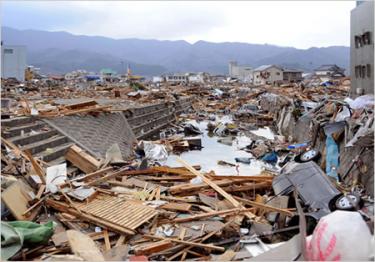
Japan
Source: United States Navy
On March 11, 2011, a monstrous 9.0-magnitude earthquake near the east coast of Japan's main island of Honshu rattled the entire country and brought much of the population to its knees.
In the more than a hundred years during which men have been measuring the strength of earthquakes, only three stronger quakes have been recorded. This one tied for the fourth-strongest on record.
This quake was the largest ever in Japan's history, unleashing the equivalent of 30,000 Hiroshima-sized nuclear bombs. It was so powerful that it shifted the earth on its axis by several inches, making make it spin a little faster and thereby shortening the day by 1.8 millionths of a second. It moved the island nation about eight feet to the east.
Since the earthquake's epicenter was offshore, the early damage from the quake was moderate, relative to the size of the tremor. The tsunami that followed was another matter. Within minutes a huge wall of water swept onto the land, crushing buildings, capsizing boats, destroying bridges and sweeping debris in its path. Cars were swept along like they were toys.
In addition to the loss of thousands of lives, half a million people were rendered homeless, forced to take refuge in temporary shelters. Many lost everything they had, except for the clothes on their backs and perhaps a few personal items.
In the days that followed, the havoc wreaked by the earthquake began to increase exponentially. Another threat to life arose—that of radiation sickness from the stricken Fukushima Daiichi nuclear power plant. With the breakdown of cooling systems due to the earthquake and tsunami, reactors were badly damaged. Officials labored frantically to avoid a disaster like that of 1986 in Chernobyl, Ukraine.
The quake's epicenter was approximately 150 miles from Japan's capital city of Tokyo. The city and its surroundings are home to 39 million people, so any strong tremor there would be catastrophic—even one much smaller than the monstrous 9.0 shaker. So of course it's been calamitous. And that's despite some preparation, big earthquakes having struck the area in the past—in 1703, 1855 and 1923.
We should consider what's happened in the context of other recent and historic quakes—and what the Bible has to say about such natural calamities.

Frequency of recent major quakes

The earthquake off the coast of Japan is the sixth major one worldwide in a year and two months. On January 12, 2010, a 7.0 earthquake struck the poverty-ridden nation of Haiti; the epicenter was approximately 16 miles west of the capital of Port-au-Prince.
Because the nation of Haiti is so poor and had few buildings designed to endure the stress of a convulsion of this magnitude, an estimated 316,000 died, 300,000 were injured and 1 million were made homeless, according to the Haitian government. An estimated 250,000 residences and 30,000 commercial structures collapsed or were severely damaged. This was the worst earthquake in the region in more than 200 years.
On February 27, 2010, a devastating magnitude 8.8 earthquake struck Chile, one of the strongest earthquakes ever recorded. Over 500 people were killed, and more than more than 1.5 million were displaced.
The earthquake triggered a tsunami, which devastated several coastal towns in south-central Chile and damaged the port at Talcahuano. Tsunami warnings were issued in 53 countries, and the wave caused minor damage in the San Diego area of California and in the Tohoku region of Japan, where damage to the fisheries industry was estimated at $66.7 million.
Chileans were only just beginning to grapple with the devastation before them even as more than two dozen significant aftershocks struck the country. In Santiago, the capital, residents reported having been terrified as the city shook for about 90 seconds.
While this earthquake was far stronger than the 7.0-magnitude one that ravaged Haiti six weeks earlier, the damage and death toll in Chile was far less extensive, in part because of stricter building standards enabling structures to withstand damage in devastating earthquakes.
On January 2, 2011, another earthquake shook southern Chile, this one with a magnitude of 7.1. Tens of thousands fled the coastal areas for higher ground, fearing the quake might generate a major tsunami like the one in 2010. Hundreds of tourists spending the New Year's holiday at resort cities cut their trips short and headed north, clogging highways.
On February 22, 2011, a 6.3-magnitude temblor struck New Zealand, leaving the city of Christchurch in ruins. This was the second major quake to strike the country in less than six months.
The earlier one of September 2010 was considerably stronger, but the Christchurch shaker did much more damage because it struck one of New Zealand's largest cities. Churches and tall buildings were toppled and more than 100 people were killed. In viewing the city, Prime Minister John Key said, "It is just a scene of utter devastation" and "We may well be witnessing New Zealand's darkest day."

Earthquake threats to the United States

What is the danger that the United States will be jolted by a colossal quake? It is not only a danger; it is virtually guaranteed to happen eventually. The two densely populated areas that are most in danger are the midlands and the West Coast.
The New Madrid fault in the Midwest is not as infamous for the threat of major earthquake damage as other faults in the continental United States, but this area experienced major seismic activity in the years 1811-1812. Seven earthquakes in the magnitude range of 6.0 to 7.7 occurred in the period of Dec. 16, 1811, through Feb. 7, 1812. These quakes rank as some of the largest in America since its settlement by Europeans.
These quakes are not as well known as other major U.S. quakes, because the affected area was sparsely populated when the cataclysms occurred. According to the United States Geologic Survey, "The area of strong shaking associated with these shocks is two to three times as large as that of the 1964 Alaska earthquake and 10 times as large as that of the 1906 San Francisco earthquake."
The first main shock of these seven occurred on Dec. 16, 1811, and was felt far away. "People were awakened by the shaking in New York City, Washington, D.C., and Charleston, South Carolina" (USGS).
During the quake that occurred on Feb. 7, 1812, the vibrations were so great that some areas of the ground sank as much as 16 feet. Resulting tidal waves from the Mississippi River created Reelfoot Lake in Tennessee. It is Tennessee's largest natural lake.

West coast quakes

The most famous of mainland earthquakes in America is the 7.8-magnitude quake that struck San Francisco in 1906. This was due to seismic shifting on the San Andreas Fault, which runs roughly 810 miles through California to Baja California in northern Mexico.
Yuri Fialko, Professor of Geophysics at the University of California San Diego, completed a study in 2006 in which he demonstrated that the San Andreas Fault has been stressed to a level sufficient for the next "big one"—an earthquake of magnitude 7.0 or greater.
Fialko's data suggests that the fault is ready for the next big earthquake, but exactly when that might occur we're not able to tell. According to professor Fialko, "It could be tomorrow or it could be 10 years or more from now."
Then there's the Cascadia subduction zone, a 680-mile fault that runs 50 miles off the coast of the Pacific Northwest from Cape Mendocino in California to Vancouver Island in southern British Columbia. Geophysicists estimate that it's capable of generating an earthquake with a magnitude as high as 9.0. The last time this occurred was in 1700; the one before that is estimated to have occurred around 1500.
Scientists say a rupture along this fault would cause the sea floor to bounce 20 feet or more, setting off powerful waves close to shore. The resultant monstrous tsunami would inundate coastal communities in minutes. As with the San Andreas Fault, geophysicists do not know if such a disaster is imminent but agree that eventually it is inevitable.

Earthquakes can affect the whole world

Every year thousands of earthquakes occur around the world, some strong enough to be felt by people. Most of them do no significant damage either to life or property. But some that have been recorded in the last 150 years have resulted in massive loss of life. An estimated 200,000 people were killed in an 8.5 quake in Kansu, China in 1920. In 1976, 255,000 people died from damage caused by an 8.0 quake centered near Tangshan, China. And the 2004 Indian Ocean earthquake and tsunami left more than 230,000 people dead in 14 countries.
Earthquakes can cripple—at least temporarily—a nation's economy. Japan is the third-largest economy in the world. While the March 11, 2011, earthquake and tsunami will have a harmful short-term medium effect on their economy, some economists believe the catastrophe will have a negative impact short-term on the world economy.
Historically, earthquakes have at times wrought permanent damage to major powers. In ancient Greece, the city-state of Sparta had the greatest military power during the classical era. "From the ninth to the fourth century BCE its armies were almost invincible . . . Sometime around 464 BCE a powerful earthquake devastated the city of Sparta with many fatalities. This event, while not immediately affecting Sparta's prominence, had a catalytic role in its eventual decline.
"The fatalities included not only Spartan soldiers but a great many women and children as well. Thus in the following years there were many fewer births among the Spartan soldier caste, leading to the weakening of Sparta's army. This earthquake foreshadowed Sparta's gradual deterioration and disappearance from the world stage" (Jelle Zeilinga de Boer and Donald Theodore Sanders, Earthquakes in Human History, 2005, pp. 45-46).
Thus, even the mighty can be laid low by the powerful shaking of the earth.

God's involvement in earthquakes?

Is God's hand ever present in the occurrence of tragic earthquakes? This quandary has often provided fodder for philosophers.
"A shocking event at mid-[18th] century supplied a brutal confirmation of disbelief. On the eve of All Saint's Day [Nov. 1] in 1755, while the faithful were in church, an earthquake shattered Lisbon. Fire and flood from the Tagus River completed its destruction. Tens of thousands perished.
"Instantly, [French historian and philosopher] Voltaire set to work on a long poem that drew the moral: how could a personal God endowed with power and justice ordain such a holocaust? For what conceivable reason kill worshipping men, women and children in a peculiarly horrible manner?
"That they were worse sinners than the same number of Parisians or Londoners was a contemptible answer. There was no answer, except that the forces of nature acted independently of their creator" (Jacques Barzun, From Dawn to Decadence, 2000, p. 378).
Because God is omnipotent, He has power over all the forces of nature to use earthquakes to punish individuals or nations, should He choose to do so. However, we should not conclude that in all cases He singles out people for chastisement through such tragedies. Sometimes people die or suffer other losses through natural disasters because of time and chance (Ecclesiastes:9:11). They are in the wrong place at the wrong time.
There are exceptions, though. Sometimes God does speak through earth's turmoil, and there is surely no greater natural tumult that man can suffer than to have the very earth shake under his feet. A prolonged horrendous earthquake can turn the bravest human beings into a quivering, frightened mass of fearful flesh.
There is perhaps nothing we depend on more than having the steady, predictable solidity of the ground under our feet. When it begins to shake, buckle and roll violently, man's confidence can be reduced to zero as he sees everything he has made with his hands come crashing down around him. God's power is limitless. "He looks on the earth, and it trembles" (Psalm:104:32).

God's past interventions

During past turbulent historical periods, God has moved the earth—sometimes to instill awe, fear and respect into the minds of people. Shortly after the time that God brought Israel out of Egypt through the Exodus, there were certain men—Korah, Dathan and Abiram—who dared question the divine authority that God had given Moses. They accused Moses of presumptuousness and self-exultation (Numbers:16:3). Furthermore, a majority of the people was sympathetic to Korah, the ringleader (verse 19).
Moses knew that God was working through him, so he assembled the three rebels and the cantankerous congregation and warned them that God would move the earth, create a crevice and cause it to swallow up those who dared reject God (verse 30). Right after Moses spoke, God caused the earth to gape open with a fissure that swallowed the rebellious leaders and their families (verses 31-32).
This historical example demonstrates that God does sometimes punish disobedient people with shaking and splitting of the earth as appropriate payment for sins.

Earthquakes at the death and resurrection of Jesus

At times God has used an earthquake to send a different message. He spoke through an earthquake in the first century right after His Son was nailed to the cross.
When Jesus died, "the earth quaked, and the rocks were split" (Matthew:27:51). Perhaps the quake foreshadowed the coming judgment of God on those who had crucified Jesus and also served as a divine sign that He truly was the Son of the Father.
It impressed the Roman soldiers who were guarding the site. "So when the centurion and those with him, who were guarding Jesus, saw the earthquake . . . they feared greatly, saying, 'Truly this was the Son of God!'" (verse 54).
God also used an earthquake to roll the stone away from Christ's empty tomb—to show that He had gained victory over the grave (Matthew:28:1-6).

The coming terror because of earthquakes

Biblical prophecy tells of future earthquakes far more powerful than any that human beings have yet experienced. The reason for these, in part, will be to instill awe and respect towards God in the hearts of all humanity at the end of the age and the return of Jesus Christ.
Isaiah:29:1 issues a woe of warning to "Ariel," which is another name for Jerusalem. Included in the dire message is the notice: "You will be punished by the Lord of hosts with thunder and earthquake and great noise" (verse 6).
Shortly before His death, Jesus gave a solemn prophetic warning of terrifying and terrible events that would precede His return. He included among these the fact that "there will be great earthquakes in various places" (Luke:21:11, emphasis added throughout).
He also admonished all that there will be the turbulence of "the sea and the waves roaring" (verse 25). This may be a reference to future titanic tsunamis.
It will be more than just the area of Jerusalem that will be dealt deathly earthquakes at the time of the end. The greatest shakings of the planet since people have existed will make the entire earth tremble. The reaction of human beings will be nothing short of absolute panic: "They shall go into the holes of the rocks, and into the caves of the earth, from the terror of the Lord and the glory of His majesty, when He arises to shake the earth mightily" (Isaiah:2:19).
There may be multiple quakes that follow that which Isaiah describes. But there will finally be one trembling and quaking of the earth that will be greater than all others.
The apostle John was given a preview of it through a vision in the book of Revelation. It will occur in conjunction with the final great battle, commonly (though erroneously) known as Armageddon, which pits the forces of Jesus Christ against those who dare rise up in rebellion against Him at His arrival.
It is part of the seventh bowl of God's wrath that is to be poured out: "There was a great earthquake, such a mighty and great earthquake as had not occurred since men were on the earth ... Then every island fled away, and the mountains were not found" (Revelation:16:18-20).
Why will God speak through such horrifying calamities to the population of the planet? It is because man is in rebellion against Him. We have worshipped and are worshipping idols and other gods instead of the true God (Isaiah:2:7-8).
This monstrous quaking of the planet will cause men to cast away their idols of silver and gold (verse 20). Idol worship is not limited to adoration of graven images. Idol worship includes the love of money and all things that money can buy. It can include excessive, inordinate lust for anything, because covetousness is idolatry (Colossians:3:5). We need to heed the Bible's warnings and turn from our sins!

What should you do?

In any given year, geophysicists record thousands of earthquakes; over 21,000 occurred in 2010. Most of these are small and do no damage. Large ones can do horrendous damage, and those that occur in the oceans can trigger disastrous tsunamis.
Men try to protect life and property against these powerful forces. They build seawalls to ward off the roiling ocean currents. Japan had constructed a 31-foot seawall near Fukushima on the island of Honshu. Yet even this could not stop the relentless wall of water.
No amount of planning, skills or constructing can stop a force that moves the planet, shaking the very ground on which we stand. Eventually the only deliverance is by turning to and placing ourselves in the hands of the only One who can truly save us—the all-powerful living God.
Nobody has commented yet. Be the first to kick off the discussion!
Login/Register to post comments

Tuesday, October 21, 2014

World News and Trends: The Catholic Church, China and Taiwan

From http://el-paso.ucg.org/  or call 1-888-886-8632. Please follow this site here.


World News and Trends: The Catholic Church, China and Taiwan


Printer-friendly version


In recent decades the Chinese have periodically cracked down on Christians. In recent months persecution has become very intense.

In recent decades the Chinese have periodically cracked down on Christians. In recent months persecution has become very intense. There are some 12 million Roman Catholics in China normally classified as members of the so-called "patriotic" church with no relationship permitted with the Vatican.
Recent reports indicate that the Vatican may abandon Taiwan diplomatically to win Chinese support for China's Catholics. Reporting from Beijing for The Sunday Telegraph (April 10), Peter Goff stated that the "Church prepares [the] way for millions to worship without fear of persecution." The stark title of his article is: "Vatican Will Abandon Taiwan to Win China's Catholics."
Bishop Joseph Zen Ze-Kiun of Hong Kong is a leading adviser for the Vatican on Chinese issues. He said that "the Holy See has been thinking of giving up Taiwan. This is a difficult [decision], but it has decided to do it. If the Holy See does not establish [diplomatic] ties with China, Catholics there will not have real freedom."
Up to now the Vatican has been the only state in Europe to recognize Taiwan's sovereignty. Pope John Paul II's pontificate did not experience good relations with China primarily because of his unrelenting opposition to communism. The Vatican is apparently trying to "put this right" as soon as practically possible. (Sources: The Wall Street Journal Europe, The Sunday Telegraph [London].)

Wednesday, October 1, 2014

Current Events & Trends: Is China the solution to Western economic Woes?

From http://el-paso.ucg.org/  or call 1-888-886-8632. Please follow this site here.


Current Events & Trends: Is China the solution to Western economic Woes?


Printer-friendly version


In the text of a graphic titled "Stepping Up to Buy," The Wall Street Journal noted: "Chinese state-owned and private enterprises are pouring investment money into the U.S., into industries such as auto parts, real estate, and oil and gas.

The number of deals, and their overall value, has climbed steadily in recent years" (accompanies "In the Heart of the Rust Belt, Chinese Funds Provide the Grease," Feb. 11, 2012). Fairly recently, in Saginaw, Michigan, the Chinese rescued from ruin a substantial automotive company—that city's largest employer.
But America is far from the only target. The teaser for an article in Time magazine by Vivienne Walt titled "Feasting on Europe" stated, "As the euro-zone crisis deepens, China is angling for the union's most prized firms" (Dec. 19, 2011). The article explained that while China may currently be a small player in Europe, that is quickly changing.
Yet historians, journalists and academics remain somewhat skeptical about the viability of Chinese assistance long-term. Harvard professor and historian Niall Ferguson is only one. His London Sunday Times feature article of March 11 was titled "Get Ready to Be a Slave in China's World Order." The drophead starkly stated, "We think Chinese money is the answer to our problems, but the reason the country [China] is prospering is hard work—very hard work—and it will expect it from us too."
A review by Oxford economics professor Paul Collier of the 2012 book Why Nations Fail, by two U.S. academics, offered this advice in its title: "Don't Look to China for Economic Salvation" ( The Observer, March 10). (Sources: The Observer, The Sunday Times [London], Time, The Wall Street Journal. )